Apple doesn’t often lay out its future in plain sight. But recent supply chain leaks, patent filings, developer previews, and executive interviews have converged into a rare clarity: Apple’s ultra roadmap is confirmed. This isn’t speculation—it’s a coordinated trajectory shaping the next generation of iPhones, MacBooks, wearables, and beyond. The company is no longer iterating; it’s accelerating toward a unified, AI-driven ecosystem built on silicon mastery and seamless user experience.
For users, creators, and businesses relying on Apple’s ecosystem, understanding this roadmap isn’t optional—it’s strategic.
The Core Pillars of Apple’s Ultra Roadmap
Three forces are powering Apple’s next phase: custom silicon, on-device AI, and ecosystem lock-in. These aren’t buzzwords. They represent a fundamental shift in how Apple designs hardware and software to work in concert.
- Silicon dominance: The M-series and A-series chips have already redefined performance efficiency. The upcoming M4 and A18 chips will push further into neural engine capabilities, enabling on-device machine learning that rivals cloud-based systems.
- AI without compromise: Unlike competitors leaning on cloud AI, Apple is betting on privacy-preserving, on-device intelligence. iOS 18 and macOS 15 are expected to feature AI-enhanced Siri, predictive text actions, and photo curation—without sending your data to remote servers.
- Ecosystem synergy: The roadmap tightens integration across devices. AirPlay, Continuity, and Universal Control are evolving into something sharper—context-aware handoffs, ambient computing features, and shared sensory data between iPhone, MacBook, and Vision Pro.
This triad ensures that owning one Apple device makes owning the next not just convenient, but inevitable.
iPhone 16 Series: Smarter, Thinner, and AI-First
The iPhone 16 lineup isn’t just about another camera bump or slightly faster chip. It’s Apple’s first true AI-native smartphone generation.
Expected upgrades include:
- A18 Bionic chip: Built on TSMC’s 3nm enhanced process, it delivers 20% better CPU performance and 30% more GPU efficiency. More importantly, the 16-core Neural Engine will power real-time AI processing for camera, voice, and predictive workflows.
- Capacitive Touch controls: Replacing the physical action button on Pro models, this pressure-sensitive strip enables dynamic shortcuts—think camera shutter, flashlight, or Voice Memo with a swipe and press.
- Thermal redesign: With AI workloads generating more heat, Apple is integrating vapor chamber cooling in Pro models—a first for iPhones.
- Camera evolution: The 48MP ultra-wide lens is finally getting an upgrade, with autofocus and low-light optimization. Computational photography will leverage AI to auto-adjust depth mapping and tone curves in video.
Real-world impact? A photographer can shoot in low light, edit on the fly using AI suggestions, and export directly to a MacBook for client review—all without touching a cable.
But there’s a caveat: AI features will be limited to Pro models. Apple is creating a clear tiered experience, where casual users get refinements, while pros get transformation.
MacBook Lineup: M4 Chips and a Redefined Air
The MacBook evolution is no longer just about thinness—it’s about intelligence, endurance, and desktop-class power in portable form.
The M4 chip, expected across the 2024–2025 lineup, brings:
- Next-gen GPU architecture: With up to 16 cores, M4-powered MacBooks will handle 8K video editing and real-time 3D rendering in Final Cut Pro and Blender.
- Improved NPU (Neural Processing Unit): Enables AI-driven features like live transcription with speaker separation, background noise removal in FaceTime, and intelligent window management in macOS.
- Longer battery life: Thanks to architectural efficiency, M4 MacBooks are projected to deliver up to 26 hours of video playback.
The MacBook Air will see its most significant update since 2022. Rumors point to:
- A 15-inch M4 Air model with a thinner bezel and brighter OLED display option.
- MagSafe charging returning as standard.
- Active cooling in higher configurations—a break from fanless design, indicating performance ambitions.
For digital nomads and remote workers, this means a MacBook Air that can replace a desktop workstation without sacrificing portability.
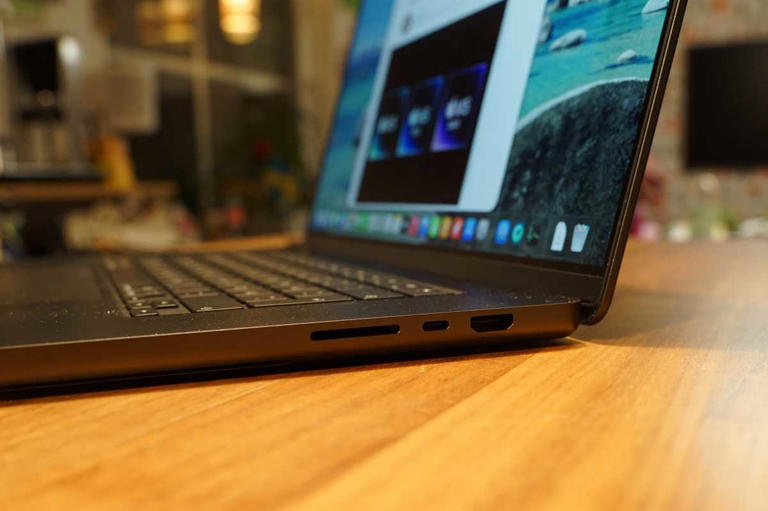
Meanwhile, the MacBook Pro 14” and 16” will push into pro studio territory, with support for multiple high-refresh external displays and hardware-accelerated AI training for developers and researchers.
Vision Pro and Spatial Computing: The Quiet Engine of the Roadmap
While not a mass-market device yet, Apple Vision Pro is central to the ultra roadmap. It’s not just a headset—it’s a testbed for the future of human-computer interaction.
Key developments:
- Enterprise rollout: Apple is partnering with hospitals, architects, and engineers to deploy Vision Pro for 3D modeling, surgical simulation, and remote collaboration.
- Developer momentum: With spatial app revenue sharing and ARKit 6, Apple is incentivizing a new class of apps that blend physical and digital environments.
- iPhone integration: Vision Pro will soon mirror iPhone interfaces in 3D space, allowing users to control their phone via hand gestures from across the room.
This isn’t sci-fi. It’s a bridge to a world where your iPhone acts as a remote control for your digital workspace, and your MacBook becomes a window into an immersive desktop environment.
The Hidden Upgrade: iOS 18 and macOS 15
Hardware is only half the story. The real magic happens in software—and iOS 18 and macOS 15 are the glue binding Apple’s ultra roadmap together.
Anticipated features:
- AI-powered Siri: Finally conversational. Ask, “Show me photos from last summer’s trip to Lake Tahoe and create a video with upbeat music,” and Siri will execute it across Photos, Music, and iMovie.
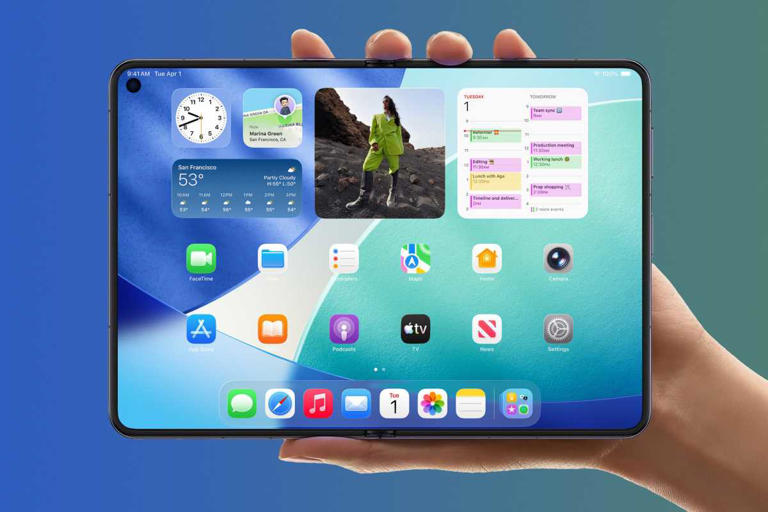
- Customizable home screens: For the first time, iOS will allow app icons to be placed anywhere, not just in a grid. Widgets will be resizable and stackable with logic-based triggers.
- Continuity Camera Pro: Turn your iPhone into a high-end webcam for your MacBook, with Center Stage, studio lighting, and noise cancellation—automatically activated when you join a Zoom call on Mac.
- Password Keychain sync with third parties: Google and Microsoft password managers will integrate with iCloud Keychain, a rare cross-platform move.
These updates reduce friction. No more switching apps to find a code, no more manual file transfers. The system anticipates your next move.
Apple Watch and AirPods: Smaller Devices, Bigger Roles
The ultra roadmap extends to wearables—quietly making them essential command centers.
Apple Watch Series 10 is expected to feature:
- Blood pressure and glucose monitoring (non-invasive, via optical sensors).
- A larger, edge-to-edge display.
- Double-tap gesture expansion—now usable in more apps.
AirPods Pro (3rd gen) will introduce:
- Real-time language translation during calls.
- Improved spatial audio with head-tracking calibration.
- On-device voice processing for faster “Hey Siri” responses.
A business traveler could land in Tokyo, wear AirPods to translate a conversation live, then check stress levels on their Watch—all without pulling out their phone.
Common Pitfalls and What Users Should Watch For
Even with this ambitious roadmap, there are traps to avoid:
- AI feature fragmentation: Not all AI tools will come to older devices. Users on iPhone 14 or MacBook Air M1 may miss key upgrades, despite OS compatibility.
- Thermal throttling risks: As MacBooks push performance, sustained workloads could trigger throttling. External cooling or workload staggering may be needed.
- Vision Pro adoption cost: At $3,500, it’s not for everyone. Enterprises should pilot before scaling; individuals should wait for a price drop.
- Battery longevity: Thinner designs often mean harder-to-replace batteries. Consider AppleCare+ for long-term ownership.
Smart users will align purchases with lifecycle. Upgrading to an M3 MacBook now may leave you behind in 12 months. Waiting for M4 is often the better play.
What This Means for You: A Strategic Outlook
Apple’s ultra roadmap isn’t just about new gadgets. It’s about a shift in user expectations—devices that anticipate, adapt, and act.
- Creatives will benefit from AI-assisted editing and cross-device workflows.
- Developers must build with spatial computing and on-device AI in mind.
- Businesses should evaluate Vision Pro for training, design, and remote support.
- Everyday users gain convenience, but must decide how deep into the ecosystem they want to go.
The roadmap confirms a simple truth: Apple is no longer selling phones or laptops. It’s selling a seamless, intelligent experience—one that becomes harder to leave the deeper you go.
Now is the time to audit your setup. If you’re on older hardware, prioritize devices that will support the AI and ecosystem features coming in iOS 18 and macOS 15. If you’re a pro user, the M4 MacBook and iPhone 16 Pro are worth the wait.
Apple’s future isn’t coming. It’s confirmed. And it’s designed to keep you inside the bubble—smarter, faster, and more connected than ever.
Frequently Asked Questions
Will the iPhone 16 have a port? Yes—USB-C remains standard across all models, with faster data transfer (up to 10Gbps) on Pro versions.
Can M4 MacBooks run AI models locally? Yes. The M4’s NPU allows developers to run LLMs like Llama 3 on-device, without internet access.
Is the Apple Vision Pro getting a cheaper model? Not in 2024. But a "Vision Lite" with reduced sensors and external battery is expected in 2025.
Will iOS 18 work on the iPhone 13? Yes, but AI features like enhanced Siri and photo cleanup will be limited to iPhone 15 Pro and later.
Are MacBook Air batteries replaceable? Yes, but only by Apple or authorized providers. Third-party replacements may disable battery health monitoring.
Will AirPods get health sensors? Not in the near term. Future models may include体温 or stress detection, but nothing is confirmed.
Is Apple moving away from Intel completely? Intel hasn’t been used since 2023. Apple’s entire Mac lineup is now Apple Silicon-only.
FAQ
What should you look for in Apple’s Ultra Roadmap Confirmed: What’s Next for iPhone and MacBook? Focus on relevance, practical value, and how well the solution matches real user intent.
Is Apple’s Ultra Roadmap Confirmed: What’s Next for iPhone and MacBook suitable for beginners? That depends on the workflow, but a clear step-by-step approach usually makes it easier to start.
How do you compare options around Apple’s Ultra Roadmap Confirmed: What’s Next for iPhone and MacBook? Compare features, trust signals, limitations, pricing, and ease of implementation.
What mistakes should you avoid? Avoid generic choices, weak validation, and decisions based only on marketing claims.
What is the next best step? Shortlist the most relevant options, validate them quickly, and refine from real-world results.