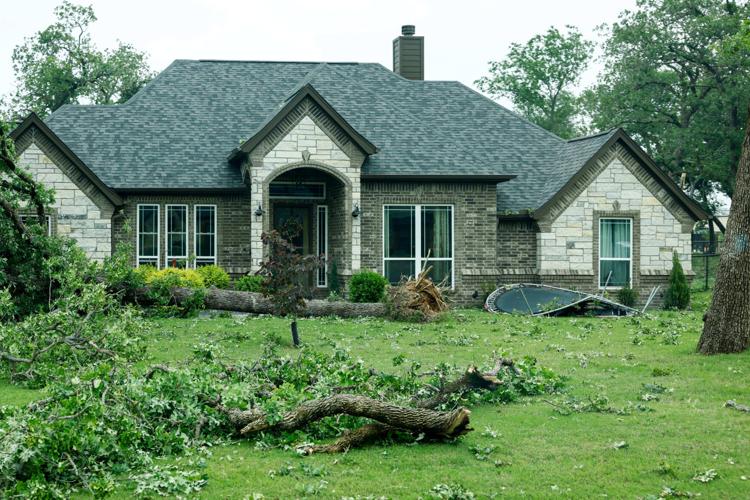
At least two people are confirmed dead after a violent outbreak of tornadoes tore through northern Texas, flattening homes, uprooting trees, and leaving entire neighborhoods unrecognizable. The storms struck with little warning late in the evening, catching residents off guard in small towns and rural communities already vulnerable to extreme weather.
Communities like Decatur, Bowie, and parts of Montague County now face the grim aftermath of nature’s fury. First responders spent hours navigating debris-choked roads to reach survivors, while hospitals activated emergency protocols to handle the influx of injuries. The full extent of the destruction is still being assessed, but early aerial footage reveals swaths of land reduced to rubble.
This isn’t the first time northern Texas has been hit by deadly tornadoes — but each event underscores a worsening trend: more frequent, unpredictable, and destructive storms fueled by shifting weather patterns across the Great Plains.
The Path of Destruction: Where the Tornadoes Hit Hardest
The hardest-hit areas include parts of Wise and Montague Counties, where National Weather Service (NWS) teams have already confirmed multiple tornado touchdowns. One particularly powerful twister, estimated to be at least EF-3 strength, carved a 17-mile path through rural farmland and residential zones near the town of Decatur.
Homes were reduced to foundations. Mobile homes, often less resilient in high winds, were completely destroyed. Power lines dangle from snapped poles, and water mains ruptured under the force of collapsing infrastructure.
Sheriff’s deputies in Montague County reported “entire subdivisions that no longer exist.” A church in Bowie, once a community anchor, was reduced to a metal frame and scattered pews. Search dogs and drones are now surveying the debris for signs of life — or remains.
Resident Maria Thompson, who survived by sheltering in her basement with two children, described the moment the storm hit: “It sounded like a thousand trains coming at once. Then the roof was just… gone. We crawled out through what used to be the kitchen wall.”
Storm Timing and Warning Gaps
One of the most troubling aspects of this tornado event is the timing. The storms struck between 8:30 PM and 11:00 PM, when many people were at home, often unaware of developing weather threats.
While the NWS issued tornado warnings up to 20 minutes in advance for some areas, not all residents received alerts. Rural pockets with poor cell coverage missed emergency notifications. Others dismissed the sirens — a common problem in regions where false alarms occur during less severe weather.
“We have the technology to warn people,” said Dr. Lena Pruitt, a meteorologist at Texas Tech. “But if people aren’t getting the message, or if they don’t take it seriously, those minutes don’t matter.”
Local officials admitted that aging siren systems in some towns failed to activate during the peak of the storm. In Decatur, one siren remained silent despite being within the tornado’s confirmed path.
Human Toll: Lives Lost and Communities Shattered
The confirmed death toll stands at two, but officials warn it may rise as search teams gain access to isolated areas. Both fatalities occurred in single-family homes that offered little protection from the high winds.
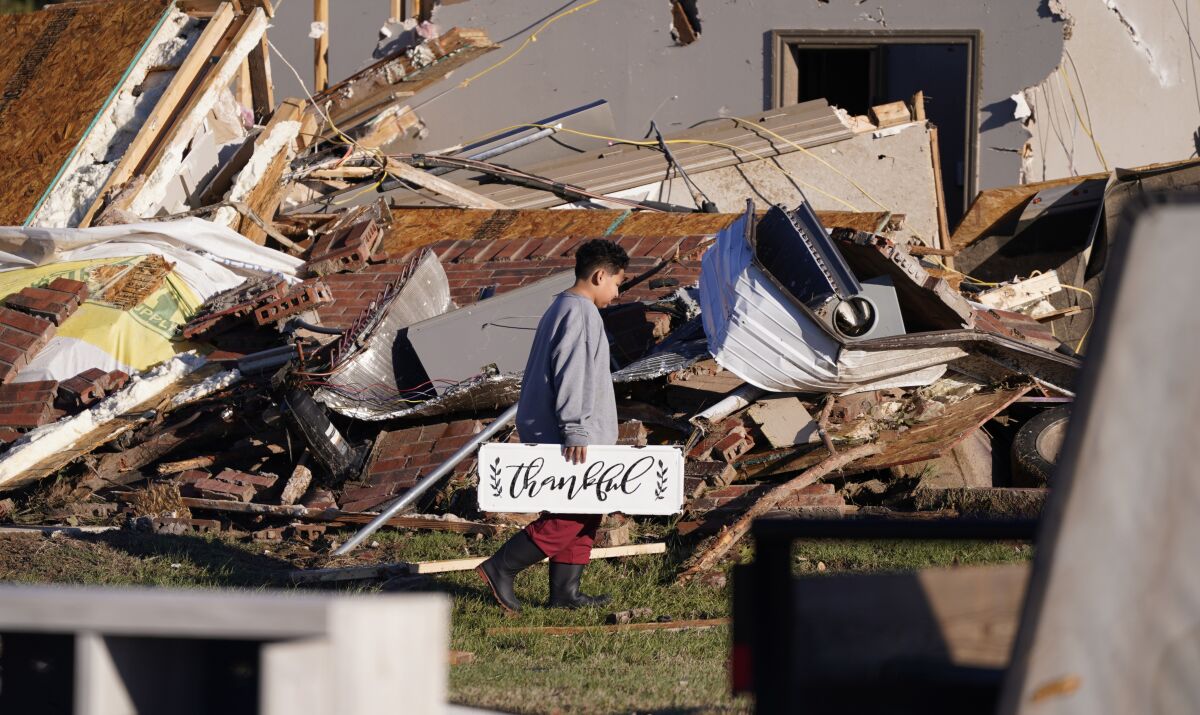
One victim, a 68-year-old man in Montague County, was found beneath the remains of his collapsed ranch-style house. Emergency crews had to use heavy machinery to reach him. The second fatality was a woman in her 50s who died when a mobile home she was sheltering in was thrown over 100 yards from its foundation.
Beyond the deaths, at least 27 people were injured, with five in critical condition. Most injuries involved blunt trauma, lacerations from flying debris, or structural collapse.
Survivors are grappling with more than physical injuries. In temporary shelters set up at high schools and community centers, families huddle together, many missing pets or personal belongings. Children draw pictures of storm clouds and missing houses. Volunteers hand out blankets and bottled water, but the emotional toll is mounting.
“We lost everything — photos, heirlooms, my grandmother’s wedding dress,” said James Holloway, evacuating from a damaged subdivision near Bowie. “You don’t think about how much you tie your memories to a house until it’s gone.”
Emergency Response and Recovery Challenges
Local fire departments, EMS units, and Texas Task Force 1 have mobilized across the region. The Texas Division of Emergency Management (TDEM) has deployed urban search and rescue teams, temporary medical stations, and rapid damage assessment crews.
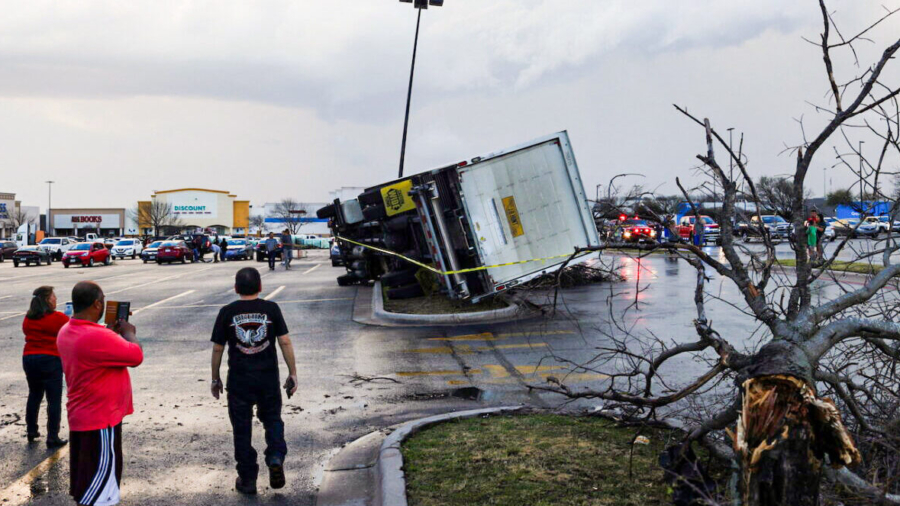
However, recovery is being slowed by logistical challenges. Downed trees and power lines block critical routes. Electricity remains out for over 14,000 customers, and some areas lack clean water due to damaged pipelines.
FEMA representatives are on the ground evaluating the need for federal disaster assistance. Governor Greg Abbott has declared a state of disaster for six counties, unlocking emergency funds and streamlining aid delivery.
Still, rural residents express frustration at the pace of response. “We’re hours from the nearest trauma center,” said Dr. Carla Mendez, who runs a clinic in a small town near the Oklahoma border. “When a storm hits this hard, we’re on our own for the first 12 hours at least.”
Why Northern Texas Is Vulnerable to Tornadoes
Northern Texas sits in a volatile zone where warm, moist air from the Gulf collides with dry, cool systems from the Rockies — a recipe for violent thunderstorms and tornadoes. The region is part of “Tornado Alley,” though recent data suggests storm activity is shifting eastward into what’s now called “Dixie Alley.”
Still, Texas leads the nation in tornado frequency, averaging over 130 per year. Northern counties, with their mix of open terrain and low-density housing, are especially at risk. Many homes lack basements due to high water tables and rocky soil, leaving residents with few safe shelter options.
Mobile homes, which account for nearly 15% of housing in some affected counties, are particularly dangerous during tornadoes. Even EF-1 storms (winds 86–110 mph) can destroy them completely.
Building codes in rural Texas are often weaker than in urban centers, and retrofitting older homes for storm resistance remains rare. “We build for heat, not for wind,” said structural engineer Dale Ritter. “That needs to change.”
What Residents Can Do to Prepare — and Survive
While no one can stop a tornado, preparation significantly increases survival odds. Experts emphasize three key steps:
- Have a Plan Before Storm Season
- Know where to shelter — ideally a basement or interior room on the lowest floor. Practice drills with family members. Keep emergency supplies packed.
- Use Redundant Alert Systems
- Don’t rely only on phone alerts. Invest in a NOAA weather radio, which provides real-time warnings without cell service. Sign up for local emergency notification systems.
- Strengthen Your Shelter
- If you can’t build a storm shelter, reinforce a closet or bathroom with plywood and sandbags. Consider installing a safe room — FEMA offers partial grants for qualified homeowners.
One of the most common mistakes? Waiting to act. “People wait to see the funnel,” said veteran storm chaser and safety trainer Rick Valenzuela. “By then, it’s too late. If the sky turns green or the wind dies suddenly, get to shelter immediately.”
Communities can also organize neighborhood alert chains, pre-position generators, and designate storm-safe public buildings.
Long-Term Recovery: Rebuilding
With Resilience
In the weeks ahead, the focus will shift from rescue to recovery. Insurance claims will flood adjusters’ offices. Some families will face the reality of being underinsured or uninsured for wind damage.
Local governments will begin debris removal and infrastructure repairs, but full rebuilding could take months or years. Nonprofits like the Red Cross and SBP (formerly the St. Bernard Project) are expected to step in with long-term housing support.
But there’s a growing call to rebuild smarter. “We can’t just replace what was lost,” said city planner Anita Chavez, who worked on post-tornado recovery in Granbury after the 2013 EF-4. “We need to elevate homes, enforce better codes, and create community shelters.”
Some towns are exploring shared underground storm bunkers — a model used successfully in parts of Oklahoma. Others are pushing for zoning laws that restrict mobile home placement in high-risk zones.
The tornadoes that ripped through northern Texas have left behind more than wreckage — they’ve exposed vulnerabilities in warning systems, housing, and emergency readiness. While the death toll remains tragically small compared to past disasters, every life lost underscores the need for better preparation.
Communities will recover, but the scars — physical and emotional — will last for years. The real test now is whether this event becomes a catalyst for lasting change. For residents, the message is clear: tornadoes don’t wait. Neither should you.
Be informed. Have a plan. Act fast. Lives depend on it.
FAQ
How many tornadoes hit northern Texas in this outbreak? At least seven tornadoes were confirmed by the National Weather Service, with multiple touchdowns across Wise, Montague, and Jack Counties.
Were there any warnings before the tornadoes struck? Yes, the NWS issued tornado warnings for several counties up to 20 minutes in advance, but not all residents received alerts due to spotty cell coverage and siren failures.
Which towns were most affected by the tornadoes? Decatur, Bowie, and areas in Montague County saw the worst damage, with entire neighborhoods destroyed and critical infrastructure compromised.
What is the current death toll from the northern Texas tornadoes? At least two people have died, with officials warning the number could rise as search efforts continue in hard-to-reach areas.
Are emergency shelters available for displaced residents? Yes, temporary shelters have been set up in schools and community centers in Decatur, Bowie, and surrounding towns, with support from the Red Cross and local volunteers.
Is federal disaster aid being considered? Governor Greg Abbott has declared a state of disaster, and FEMA teams are assessing damage to determine eligibility for federal assistance.
How can people help tornado survivors in northern Texas? Donations can be made through the North Texas Food Bank, American Red Cross, and local relief funds set up by county governments. Avoid unsolicited physical donations — cash gives responders more flexibility.
What mistakes should you avoid? Avoid generic choices, weak validation, and decisions based only on marketing claims.
What is the next best step? Shortlist the most relevant options, validate them quickly, and refine from real-world results.