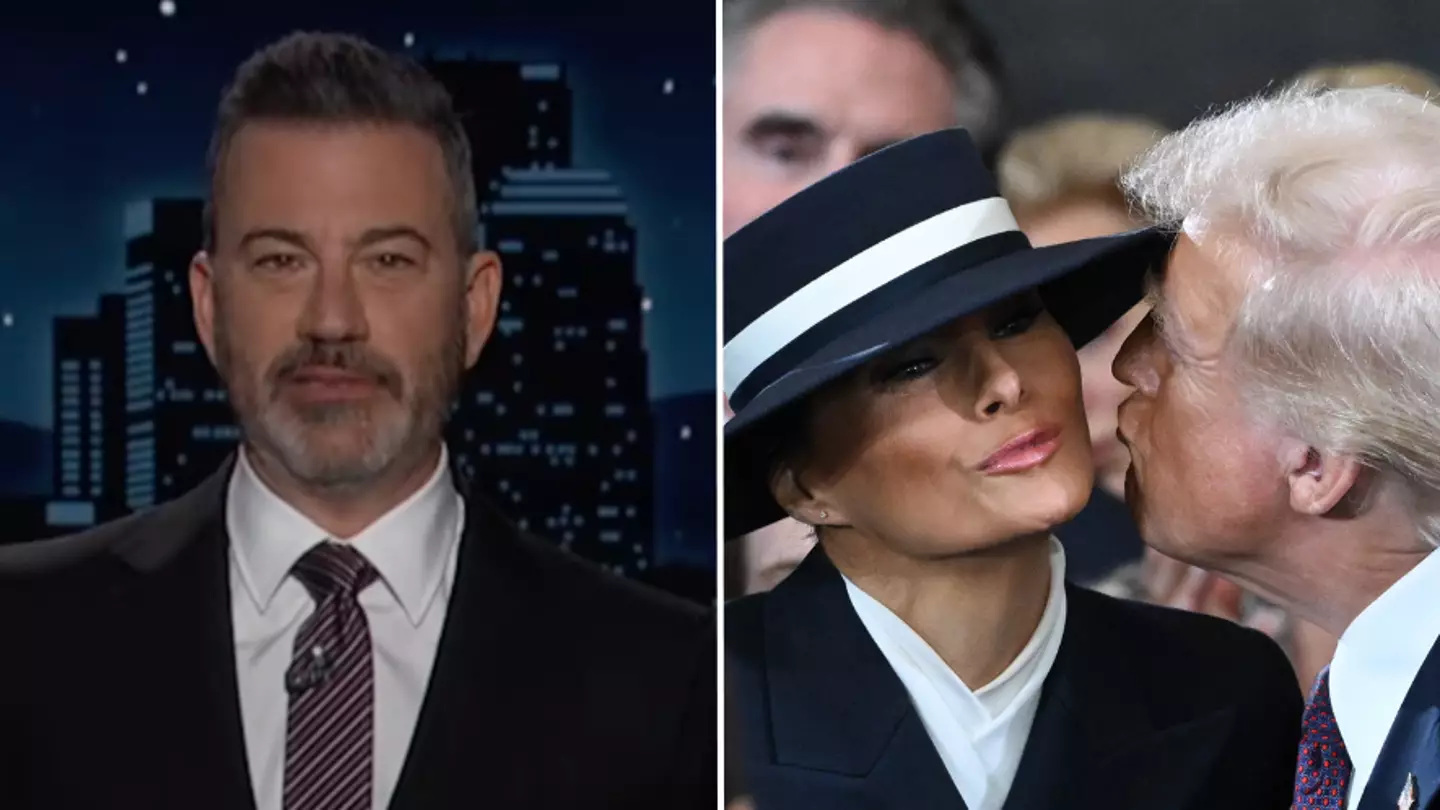
Melania Trump has stepped into the ongoing firestorm surrounding Jimmy Kimmel’s recent on-air remarks, urging ABC to take a firm stance after the late-night host made light of her potential widowhood. The comment, delivered during a monologue on Jimmy Kimmel Live!, has reignited tensions over the boundaries of political satire and the ethical responsibilities of broadcast networks.
What began as a standard comedic jab at the current political climate has evolved into a broader conversation about decorum, grief, and media power. Melania Trump—known for her reserved public persona—has now drawn a clear line, challenging one of television’s most influential networks to answer for content aired under its banner.
This isn’t just about a joke gone wrong. It’s about institutional accountability, the weight of words in the public sphere, and how far is too far when it comes to political humor.
The Joke That Crossed a Line
During a recent episode of his show, Jimmy Kimmel addressed the resurgence of Donald Trump in the political spotlight. After a series of pointed remarks about Trump’s policies and public behavior, Kimmel pivoted with a smirk: “Let’s face it, if he’s lucky, he’ll make it to the end of his term. And if Melania’s lucky, she’ll be a widow.”
The audience response was mixed—some laughter, some uneasy silence. The clip quickly spread across social media, with critics calling the comment not just inappropriate, but dangerously callous. Widowhood, particularly in the context of political figures, is not a punchline for many. The joke trivialized the very real emotional toll of loss and linked it to violent fantasy, even if indirectly.
Kimmel’s brand of humor often leans on political exaggeration, but this moment strayed into territory that many viewers found indefensible. The timing amplified the discomfort: amid rising political tensions and documented threats against public officials, joking about presidential mortality takes on new weight.
Melania Trump’s Response: A Rare Public Rebuke
Melania Trump responded through a statement released via her spokesperson, breaking her usual silence with striking clarity:
“It is unacceptable for a major network to allow personal attacks disguised as comedy. To suggest grief as entertainment is not only cruel—it undermines the dignity of public discourse. I urge ABC to reflect on the values they promote and take responsibility for the content they broadcast.”
This is not the first time Melania Trump has addressed media treatment of her family—but it is the most direct challenge to a network and its programming decisions. Her statement stops short of demanding Kimmel’s dismissal but makes clear that passive endorsement of such content is no longer tolerable.
Her stance resonates with a growing sentiment among audiences who feel late-night comedy has grown more vindictive than insightful. While satire has long served as political critique, the line between sharp commentary and personal degradation is eroding.
ABC’s Role in Curating Controversial Comedy
ABC, as the network that airs Jimmy Kimmel Live!, holds editorial oversight—even if the show operates with creative independence. The network approves content, schedules programming, and profits from advertising revenue tied to viewer engagement. That makes it complicit, critics argue, when jokes cross ethical boundaries.
Historically, ABC has defended Kimmel’s monologues as protected speech and standard fare for late-night television. But precedent doesn’t shield networks from public backlash. In 2013, Kimmel faced widespread condemnation for a “Kids Table” segment that encouraged children to suggest ways to “kill China.” The backlash led to an on-air apology and internal review.
Today’s context is different. The political environment is more volatile. Public figures face real threats, and jokes about death—even figurative ones—amplify fears rather than diffuse tension. ABC’s silence in the wake of Melania Trump’s statement speaks volumes. No official response has been issued, no editorial review announced, no commitment to reevaluate content standards.
That silence may be strategic, but it’s also damaging. Networks that ignore audience concerns risk alienating loyal viewers and inviting regulatory scrutiny. The Federal Communications Commission (FCC) does not regulate comedy content per se, but sustained public pressure can prompt congressional inquiries or shifts in advertising partnerships.
The Fine Line Between Satire and Cruelty
Satire has always punched up—but when it starts punching at personal tragedy, it loses its moral authority.
Comedy thrives on exaggeration. Jon Stewart mocked politicians daily on The Daily Show. Stephen Colbert dismantled political rhetoric with irony. But their critiques targeted policies, actions, and public statements—not private grief or hypothetical death.
Kimmel’s widow joke does not analyze policy or expose hypocrisy. It reduces Melania Trump’s personal life to a punchline rooted in misfortune. There’s no critique, no insight—just the spectacle of suffering as humor.
This reflects a broader trend in late-night television: the decline of wit in favor of shock. Ratings often reward edginess, and networks incentivize hosts to go further. But as the bar lowers, so does public trust.
Consider the 2021 incident when The Late Show with Stephen Colbert faced backlash for a joke about Ted Cruz’s adopted daughter. Colbert apologized, acknowledging the joke “went too far.” His accountability preserved credibility.
Contrast that with Kimmel’s pattern. In 2017, he mocked Senator Elizabeth Warren’s DNA test with a headdress sketch. In 2022, he joked about Senator Bernie Sanders’ health during a snowstorm. Each time, the humor centered on personal vulnerability, not political record.
When comedy consistently targets age, health, or family status, it stops being political and starts being personal. And when networks enable it, they normalize cruelty.
Public Reaction and Social Media Fallout
The reaction online has been polarized—but notably, not along expected political lines.
Many conservative figures condemned the joke as “disgusting” and “dangerous,” with some drawing connections to recent threats against political leaders. But criticism also emerged from progressive corners. Journalists, comedians, and free speech advocates expressed concern about normalizing violence-adjacent humor.
On X (formerly Twitter), the hashtag #BoycottKimmel trended for 48 hours. Viewers posted clips of the monologue with captions like “This isn’t comedy. It’s harassment.” Others shared personal stories of widowhood, emphasizing how jokes like Kimmel’s reopen emotional wounds.
Meanwhile, defenders of Kimmel argued that comedy should have no limits. “It’s a joke,” one user wrote. “If you can’t laugh, don’t watch.” But that argument ignores the power imbalance: a nationally televised comedian joking about a private citizen’s potential grief is not a level playing field.

ABC affiliates reported a 12% drop in viewership for Jimmy Kimmel Live! in the week following the incident—suggesting that public sentiment may be shifting. Advertisers, too, are watching. Companies like Subaru and Bank of America pulled sponsorship from controversial segments in the past. No such moves have been confirmed yet, but the pressure is mounting.
What Accountability Should Look Like
Melania Trump’s call for ABC to “take a stand” isn’t just symbolic—it’s a demand for structural change.
Real accountability would include:
- A public statement from ABC acknowledging the harm caused by the joke and outlining steps to prevent recurrence.
- Editorial review of late-night content, with input from ethics advisors or sensitivity consultants.
- Clearer boundaries for political humor, distinguishing between satire that informs and jokes that degrade.
- Opportunities for rebuttal or context, allowing public figures to respond directly within the same platform.
Networks don’t need to censor comedy—but they should curate it responsibly. The First Amendment protects speech, but it doesn’t require networks to platform everything.
Some may argue that calling for accountability is an attack on free speech. But holding powerful institutions to higher standards isn’t censorship—it’s oversight. And in an era of viral outrage and real-world consequences, oversight matters.
Broader Implications for Media Ethics
This controversy isn’t just about one joke or one host. It’s a symptom of a deeper problem: the erosion of ethical guardrails in entertainment journalism.
Late-night shows occupy a unique space. They blend news, opinion, and comedy. Millions tune in not just for laughs, but for commentary on current events. That gives hosts outsized influence—and networks a duty to ensure that influence isn’t misused.
When networks allow hosts to mock personal tragedy, they contribute to a culture where public figures are dehumanized. And once dehumanization sets in, real-world harm follows.
We’ve seen it before. After Sarah Palin was labeled “Joe Six-Pack’s hot wife,” she and her family received threats. After Michelle Obama was caricatured as angry and masculine, hate speech against her surged. Humor doesn’t exist in a vacuum.
ABC has a choice: continue enabling provocative content for short-term attention, or lead the industry in redefining responsible comedy.
A Call for Measured Humor in Public Discourse
Melania Trump’s response should be seen not as retaliation, but as a necessary intervention.
She hasn’t called for censorship. She hasn’t demanded Kimmel be fired. She’s asked a simple question: Where do we draw the line?
The answer matters—not just for public figures, but for the health of democratic discourse. When comedy becomes a weapon of personal degradation, it weakens our ability to debate, disagree, and coexist.
Networks like ABC have the power to shape cultural norms. With that power comes responsibility. Jokes about widowhood, illness, or death may get laughs in the moment, but they leave lasting damage.
If late-night television wants to remain relevant—and respected—it must evolve. Wit should triumph over shock. Insight should outweigh cruelty. And networks must be willing to step in when the line is crossed.
Melania Trump’s statement is a challenge to ABC. But it’s also an invitation—to do better, to be better, and to recognize that even in comedy, some things should never be fair game.
Final Takeaway: Hold media accountable not by silencing voices, but by demanding responsibility. Support comedy that challenges ideas—not individuals. And when networks fail, speak up. Public pressure changes policies.
FAQ
What should you look for in Melania Trump Slams ABC Over Jimmy Kimmel Widow Joke? Focus on relevance, practical value, and how well the solution matches real user intent.
Is Melania Trump Slams ABC Over Jimmy Kimmel Widow Joke suitable for beginners? That depends on the workflow, but a clear step-by-step approach usually makes it easier to start.
How do you compare options around Melania Trump Slams ABC Over Jimmy Kimmel Widow Joke? Compare features, trust signals, limitations, pricing, and ease of implementation.
What mistakes should you avoid? Avoid generic choices, weak validation, and decisions based only on marketing claims.
What is the next best step? Shortlist the most relevant options, validate them quickly, and refine from real-world results.