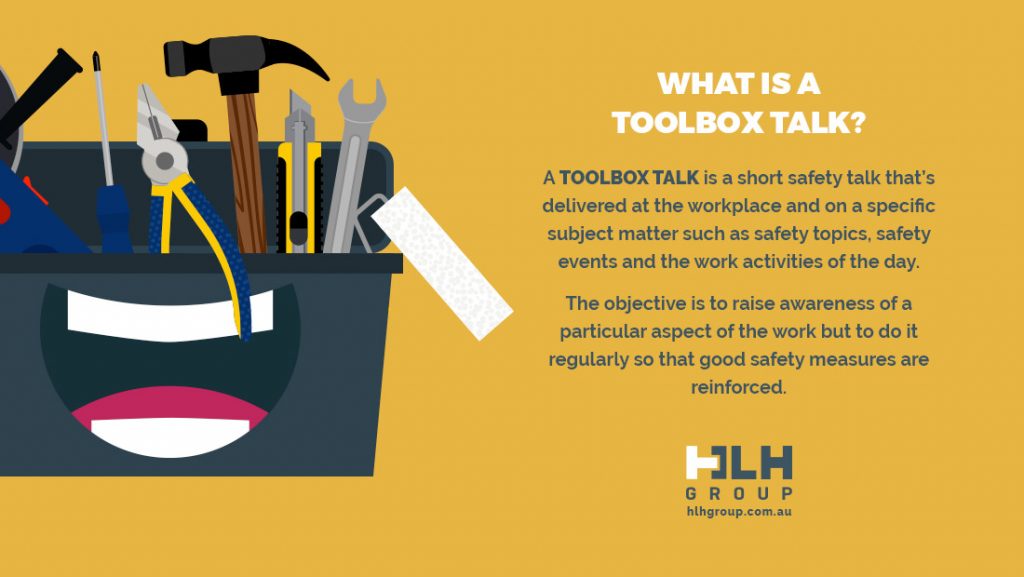
Workers gather in a semi-circle near a construction trailer. A supervisor holds a laminated sheet and points to a photo of a frayed extension cord. Five minutes later, the team disperses—helmets on, radios crackling. Nothing dramatic happened. No one signed a form. But something shifted. Awareness was raised. A hazard was named. That’s the quiet power of a toolbox talk.
The purpose of toolbox talks isn’t to check a compliance box. It’s to close the gap between policy and practice—between knowing safety rules and acting on them in real time. These short, focused discussions are a frontline defense against incidents, especially in industries like construction, oil and gas, manufacturing, and utilities.
Yet too many teams treat them as routine roll calls. They’re delivered without engagement, forgotten by lunch, and repeated like scripts. When done poorly, toolbox talks become noise. When done right, they save lives.
Let’s break down what they’re truly for, why they matter, and how to make them work.
Reinforcing Daily Safety Awareness
Toolbox talks exist to keep safety top of mind. In high-risk environments, complacency kills. Repetition isn’t the enemy—it’s the antidote.
These discussions remind workers that hazards aren’t just in manuals—they’re in the way a ladder leans, how a wire is coiled, or whether gloves are worn. A five-minute talk about slip-resistant footwear, for example, can prevent a fall on a wet platform that afternoon.
Real-World Example A maintenance crew in a chemical plant conducted a weekly talk on confined space entry. Two days later, a technician paused a cleaning operation when he noticed low oxygen readings—exactly the behavior the talk had reinforced. The space was re-ventilated, and a potential asphyxiation was avoided.
Awareness isn’t built in annual training alone. It’s sustained through regular, relevant conversations.
Addressing Site-Specific Hazards
Generic safety talks fail because they’re disconnected from reality. The real purpose of toolbox talks is to target today’s risks here, on this site, for this crew.
A talk about trench cave-ins makes sense on a pipeline job—but not on a roofing project. Similarly, discussing crane safety near heavy machinery is timely; doing so in a warehouse with no lifting operations is wasted effort.
Practical Workflow Tip
Before each talk, supervisors should walk the site for 10 minutes and note: - New equipment or materials introduced - Weather changes (e.g., high winds, rain) - Unusual tasks scheduled that day - Near-misses from the previous shift
This ensures the talk is anchored in actual conditions, not assumptions.
Encouraging Two-Way Communication
One of the most underused purposes of toolbox talks is their ability to open dialogue.
Too often, they’re monologues. A supervisor reads, workers nod, and everyone moves on. But the most effective talks are interactive. They invite questions, stories, and pushback.
When workers speak up—“That scaffolding feels shaky,” or “We didn’t get the updated lockout tags”—they’re not just identifying risks. They’re taking ownership.
Common Mistake Assuming silence means agreement. In many cultures, workers hesitate to challenge authority. A good facilitator asks direct, open-ended questions: - “Have you seen this hazard before?” - “What would you do if this failed during use?” - “Is there anything missing from our PPE setup?”
This turns passive listeners into active participants.
Reinforcing Safety Procedures and Compliance
Toolbox talks are not a replacement for formal training. But they are a reinforcement tool.
They clarify how procedures apply in practice—especially when changes occur. For example, when a company updates its fall protection policy, a toolbox talk can explain: - What’s changed - Why it matters - How it affects the crew’s daily work
This prevents confusion and increases adherence.
Use Case: Introducing New Equipment A logistics company rolled out electric forklifts. Before operation began, a toolbox talk covered: - Differences in handling vs. diesel models - Charging station safety - Emergency shutdown steps
Workers asked questions, tested controls under supervision, and reported confidence increased by 70% in post-talk surveys.
Building a Proactive Safety Culture
The long-term purpose of toolbox talks extends beyond daily risks—they shape culture.
When safety discussions happen consistently, they signal that leadership cares. Workers begin to expect them. They start noticing hazards on their own. They correct peers. Safety stops being “someone else’s job.”
This shift doesn’t happen overnight. But repeated, meaningful talks create a feedback loop: more engagement → more reporting → fewer incidents → more trust.
Limitations to Acknowledge Toolbox talks alone won’t fix a broken safety culture. If workers fear retaliation for speaking up, or if management ignores their concerns, even the best-facilitated talk becomes performative.
They work best when embedded in a larger system that includes: - Anonymous reporting channels - Visible leadership follow-up - Recognition for safety contributions
Without these, talks become rituals, not results.
Reducing Incident Rates Through Prevention
Data supports their impact. According to OSHA, companies that conduct regular, targeted safety meetings see up to a 60% reduction in recordable incidents over two years.
Toolbox talks contribute by: - Identifying hazards before they cause harm - Correcting unsafe behaviors in real time - Reinforcing emergency response readiness
They’re a low-cost, high-return intervention.
Realistic Example A roofing contractor implemented daily 10-minute talks during peak summer. Topics included heat stress, ladder safety, and PPE use. Over one season: - Heat-related incidents dropped 80% - Fall protection violations fell from 12 to 2 per month - Crews reported feeling “more prepared” in 94% of feedback forms
Prevention isn’t flashy. But the numbers speak for themselves.
Enhancing Team Coordination and Accountability Toolbox talks also serve an operational purpose—aligning the team.

They clarify roles, confirm task plans, and assign safety responsibilities. For example: - “Juan, you’re the spotter for the crane lift.” - “Lisa, verify the gas monitor is calibrated.” - “If visibility drops below 50 feet, we stop work.”
These aren’t just safety rules. They’re coordination tools.
When everyone hears the same instructions at the same time, misunderstandings decrease. Accountability increases. And if something goes wrong, there’s a shared reference point.
Supporting Onboarding and Mentorship
New hires are at higher risk—up to 300% more likely to be injured in their first month, according to NIOSH.
Toolbox talks offer a low-pressure way to integrate them.
Instead of isolating rookies with manuals, include them in daily discussions. Let them observe how experienced workers identify hazards. Encourage mentors to explain “why” behind rules.
This informal learning builds confidence and competence faster than formal training alone.
Practical Tip Pair new workers with a “safety buddy” and assign them to co-lead one talk per month. Topics can be simple: glove selection, housekeeping, or hand signals. The act of presenting reinforces learning.
Making Toolbox Talks Actually Work Knowing the purpose isn’t enough. Execution determines impact.
Here’s how to avoid the common pitfalls:
- Keep it short: 5–10 minutes max. Respect workers’ time.
- Make it visual: Use photos, props, or diagrams. A picture of a damaged harness hits harder than a verbal description.
- Rotate facilitators: Let crew members lead occasionally. It builds ownership.
- Track topics: Avoid repetition. Use a calendar to plan themes weekly.
- Follow up: If a hazard is reported, close the loop. “You mentioned the loose railing—we fixed it by noon.”
The goal isn’t perfection. It’s progress. One solid talk per week beats five rushed, forgettable ones.
Final Thought: Purpose Over Procedure
The purpose of toolbox talks isn’t to satisfy auditors. It’s to protect people.
They work when they’re relevant, respectful, and rooted in real work. When they invite dialogue instead of dictation. When they turn safety from a policy into a practice.
Don’t just hold a toolbox talk. Use it. Name the risks. Hear the concerns. Make the change.
Start tomorrow: pick one hazard, gather your team, and talk. Not because you have to—but because it matters.
What Is the Purpose of Toolbox Talks: Key Takeaways
- Reinforce daily safety awareness in high-risk environments
- Address immediate, site-specific hazards before work begins
- Encourage open communication between workers and supervisors
- Reinforce formal training and procedural updates
- Build a culture where safety is shared, not siloed
- Reduce incidents through proactive prevention
- Improve team coordination and individual accountability
- Support onboarding and peer mentorship
Act now: Review your last three toolbox talks. Were they reactive or proactive? Generic or specific? Monologue or dialogue? Adjust one element tomorrow to align with their true purpose—keeping people safe, one conversation at a time.
FAQ
What should you look for in What Is the Purpose of Toolbox Talks in Workplace Safety? Focus on relevance, practical value, and how well the solution matches real user intent.
Is What Is the Purpose of Toolbox Talks in Workplace Safety suitable for beginners? That depends on the workflow, but a clear step-by-step approach usually makes it easier to start.
How do you compare options around What Is the Purpose of Toolbox Talks in Workplace Safety? Compare features, trust signals, limitations, pricing, and ease of implementation.
What mistakes should you avoid? Avoid generic choices, weak validation, and decisions based only on marketing claims.
What is the next best step? Shortlist the most relevant options, validate them quickly, and refine from real-world results.