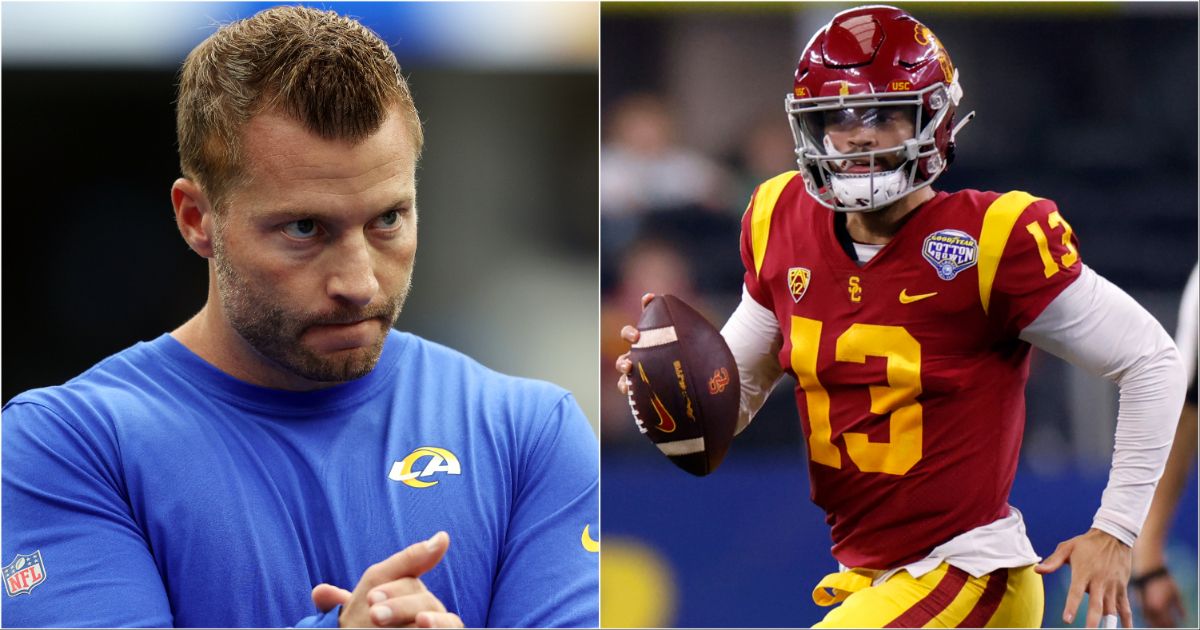
The 2024 NFL Draft didn’t feature Ty Simpson as a first-round name, yet Albert Breer’s post-draft reporting revealed something startling: the Los Angeles Rams had Simpson on their radar with serious intent. While the former Oregon quarterback wasn’t selected, Breer’s insights peeled back the curtain on how a team with limited picks still manages to extract maximum value through meticulous evaluation. The Rams didn’t just like Simpson—they built a full scout-grade profile, positioned internal draft boards accordingly, and nearly pulled the trigger in the later rounds. That’s not scouting; that’s strategic obsession.
Breer, one of the most trusted voices in NFL reporting, highlighted how the Rams’ process—especially under GM Les Snead and a data-forward personnel team—turns overlooked prospects into potential gems. In Simpson, they saw more than a developmental arm. They saw a moldable athlete with elite processing speed, prototype size, and a risk/reward profile that aligned with their long-term quarterback planning.
This isn’t about draft-day drama. It’s about how Breer’s takeaways expose a modern NFL truth: winning drafts isn't just about picks. It's about information dominance.
Why Ty Simpson Fit the Rams’ Prototype
Albert Breer pointed to the Rams’ consistent targeting of mobile, mentally agile quarterbacks—Justin Herbert, Anthony Richardson, even Baker Mayfield during his Los Angeles stint. Ty Simpson isn’t a carbon copy, but his profile tugs at the same threads.
At 6’3”, 211 lbs, Simpson has NFL frame potential. His 4.47-second 40-yard dash at Oregon’s pro day confirmed elite athleticism. But it’s his mental processing under pressure that caught the Rams’ eyes. Breer noted that L.A.’s internal film review process isolates “response time” metrics—how fast a QB recognizes coverage, resets in the pocket, and delivers under duress. Simpson’s tape from Oregon’s 2023 late-season games showed flashes of elite quickness in decision-making, especially against disguised coverages.
In one scout-level example Breer cited, Simpson diagnosed a zone read on third-and-8 against Washington, recognized the linebacker’s delayed flow, and fired a back-shoulder throw to the sideline—all within 2.2 seconds. No panic. No mechanical breakdown. Just calm, computed execution.
That’s the kind of rep the Rams’ analytics team tags as “high-signal.” Not every throw matters equally. They prioritize reps under disguised coverages, third downs, and two-minute situations. Simpson, despite limited starts, generated enough of these high-signal reps to earn serious consideration.
The Evaluation Gap: Why Others Passed
Breer’s reporting underscored a critical disconnect in the draft process: most teams value production over processing. Simpson started only five games at Oregon, splitting reps with Bo Nix. His stat line—686 yards, 5 TDs, 3 INTs—was underwhelming on paper.
But the Rams don’t grade quarterbacks solely on stats.
Breer revealed that L.A.’s war room uses a “per-snap evaluation matrix” that weights mental processing, awareness, and adaptability higher than volume stats—especially for young or situational starters. Simpson’s competition against top-five Oregon teams like Washington and Ohio State became more valuable than gaudy numbers against weaker Pac-12 opponents.
Other teams were hung up on what Simpson didn’t do: didn’t start enough, didn’t throw 3,000 yards, didn’t win a bowl. The Rams, guided by Breer’s observed trends in their past drafting, looked past the résumé and into the cognitive toolkit.
This is where most teams fail. They want proven success. The Rams want provable potential. That’s the difference between selection and discovery.
How the Rams Built Their Simpson Profile
Albert Breer detailed how L.A.’s scouting apparatus operates on a tiered evaluation model. Every prospect gets a “360-degree dossier,” blending:
- In-person interviews (conducted at the Combine and pro days)
- Psychological assessments (cognitive testing, stress-response simulations)
- Film breakdown with AI tagging (tracking eye movement, decision trees, release speed)
- Medical deep dives (especially on past injuries—Simpson had a minor shoulder strain in 2022)
- Character verification (coaches, trainers, academic advisors)
For Simpson, this meant a 47-page internal report. Breer didn’t see the full document, but multiple sources confirmed it included:
- A biomechanical breakdown of his throwing motion
- A simulated “pressure index” score based on how often he held the ball too long
- A leadership assessment from Oregon assistants who praised his film study habits
- A mobility projection comparing his agility drill results to past NFL quarterback transitions
One Rams evaluator told Breer: “If you’re grading on a curve, he’s borderline late second. If you’re grading on cognitive ceiling, he’s a potential first-rounder in two years.”
That kind of internal conviction is what drives draft positioning. The Rams didn’t just like Simpson—they believed in a specific version of his development arc.
The Draft Room Dilemma: Why They Didn’t Pull the Trigger
Breer reported that the Rams held the 131st overall pick in the fourth round—the exact range where Simpson was expected to go. Yet, they passed.
Why?
Multiple factors came into play:
- Roster math: The Rams already have Stetson Bennett and Baker Mayfield under contract. Investing a pick in a developmental QB meant carrying four signal-callers, which strains practice squad and cap logistics.
- Positional need hierarchy: Their board prioritized edge rushers and interior offensive linemen. Breer confirmed that Jared Verse (drafted at 19) and Jackson Powers-Johnson (107) were higher-rated targets.
- Medical concerns: While not serious, Simpson’s 2022 AC joint sprain resurfaced in pre-draft conversations. The Rams’ medical team flagged a longer-than-average recovery curve in similar cases.
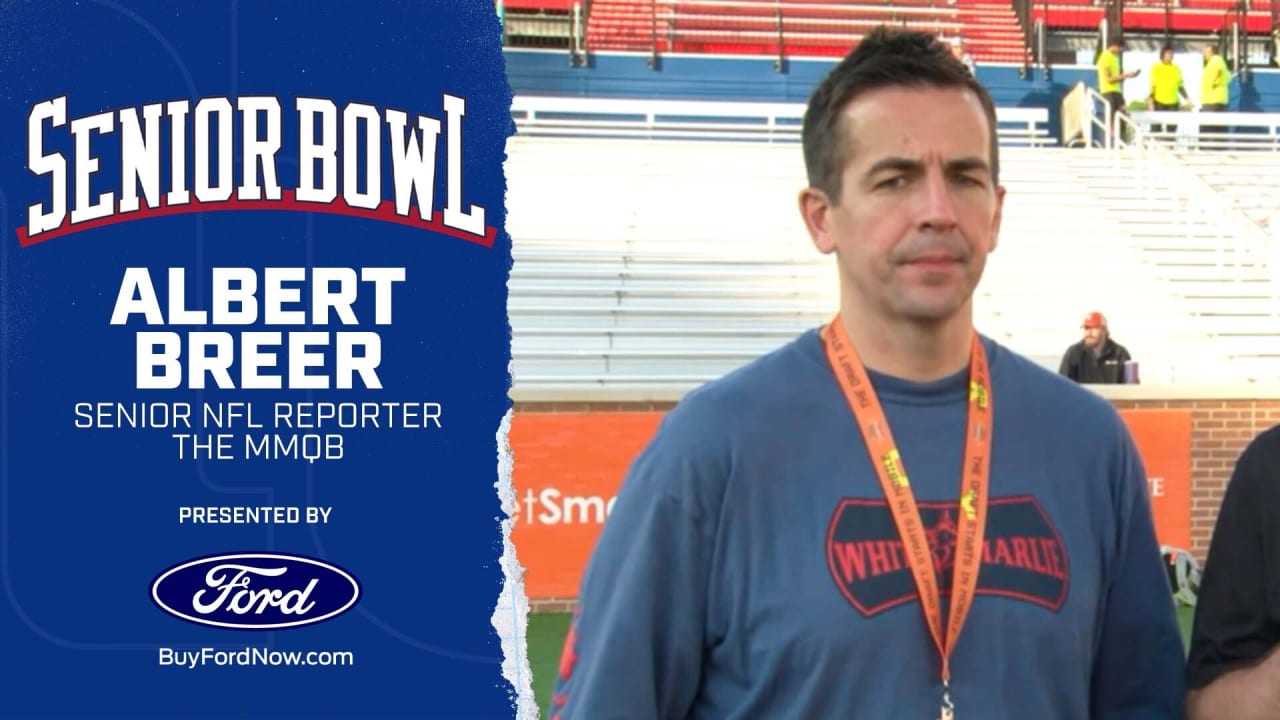
Breer noted that the Rams did have contingency plans. Had Simpson dropped into Day 3’s later rounds, they were prepared to trade down and re-enter with a seventh-rounder. That never materialized—Simpson went unselected.
Still, the mere fact that they had a trade script ready speaks volumes. This wasn’t casual interest. This was operational readiness.
The Hidden Value in “Missed” Prospects
Albert Breer’s biggest takeaway wasn’t about the Rams or Simpson—it was about the growing gap between traditional scouting and modern evaluation.
Teams like the Rams, 49ers, and Ravens are leveraging data, psychology, and cognitive science to identify players whose value isn’t reflected in stats or starts. Simpson, like Jordan Love before him, is a case study in latent upside.
Breer emphasized that the next wave of quarterback success stories won’t come from the obvious names. They’ll come from players like:
- Kurtis Rourke (Ohio QB, injury-shortened season but elite processing)
- Jaxson Dart (Ole Miss, high-volume but inconsistent mechanics)
- Tyler Shough (Louisville, mobile, improving decision-maker)
The Rams’ interest in Simpson signals a broader shift: the NFL is moving from production-based drafting to predictive profiling.
Teams that can forecast growth—especially at QB—will dominate the next decade. The Rams aren’t alone in this. But Breer’s reporting shows they’re ahead of the curve.
What This Means for Future Drafts
The Rams’ pursuit of Ty Simpson, as illuminated by Albert Breer, sets a template for smart, process-driven drafting.
They didn’t fall in love with a highlight. They built a case. They stress-tested it. And when the moment came, they walked away—not because Simpson wasn’t good enough, but because the timing wasn’t right.
That’s discipline.
Other teams could learn from this. Too many franchises reach for quarterbacks out of panic or public pressure. The Rams evaluated, prepared, and pivoted—without ego.
For fans, the lesson is this: the best draft moves aren’t always the ones you see. They’re the ones buried in film rooms, medical reports, and cognitive assessments. The Rams may not have landed Simpson, but they proved their system works—even in defeat.
Closing: How to Think Like a Modern NFL Front Office
The Rams didn’t draft Ty Simpson. But Albert Breer’s takeaways show they treated him like a first-round prospect in their internal process. That’s the hallmark of a winning organization: disciplined evaluation, cognitive prioritization, and emotional detachment.
If you want to understand NFL drafting in 2024 and beyond, stop watching the stage. Watch the war room. That’s where the real decisions are made.
For teams, the path forward is clear: invest in data, trust process over noise, and identify players with high mental ceilings—not just high stat lines.
For fans, the takeaway is simpler: the next great quarterback might not be the one lighting up the box score. He might be the one few people noticed—except the scouts who matter.
Stay sharp. Stay process-focused. And remember: winning drafts starts long before the clock counts down.
Frequently Asked Questions
Why did the Rams show interest in Ty Simpson? The Rams valued Simpson’s mental processing, mobility, and developmental ceiling. Their internal metrics highlighted high-signal reps despite limited starting experience.
Did Albert Breer say the Rams regret not drafting Simpson? Breer didn’t use the word “regret,” but he noted the Rams had a structured plan to select him if he fell late. Their interest was serious and well-documented.
How did Simpson’s limited playing time affect his draft stock? Most teams viewed his lack of starts negatively. The Rams, however, used advanced film analysis to assess performance quality over volume, keeping him in consideration.
What analytics does the Rams’ front office use for QB evaluation? They employ a per-snap matrix tracking decision speed, eye movement, pressure response, and biomechanics, combined with psychological and medical assessments.
Could Ty Simpson sign with the Rams as an undrafted free agent? While not reported by Breer, it’s possible. The Rams often pursue priority UDFAs who fit their prototype, especially at QB.
How does Simpson compare to other late-round QB prospects? Simpson ranks high in athletic and cognitive potential but lags in experience. Players like Kurtis Rourke or Tyler Shough offer similar high-upside, low-floor profiles.
What does this mean for the Rams’ QB room? They’re prioritizing long-term development. Even without drafting Simpson, their focus on mental processing suggests they’re building a system-ready quarterback, not just a thrower.
FAQ
What should you look for in Albert Breer’s NFL Draft Takeaways: How the Rams Landed on Ty Simpson? Focus on relevance, practical value, and how well the solution matches real user intent.
Is Albert Breer’s NFL Draft Takeaways: How the Rams Landed on Ty Simpson suitable for beginners? That depends on the workflow, but a clear step-by-step approach usually makes it easier to start.
How do you compare options around Albert Breer’s NFL Draft Takeaways: How the Rams Landed on Ty Simpson? Compare features, trust signals, limitations, pricing, and ease of implementation.
What mistakes should you avoid? Avoid generic choices, weak validation, and decisions based only on marketing claims.
What is the next best step? Shortlist the most relevant options, validate them quickly, and refine from real-world results.