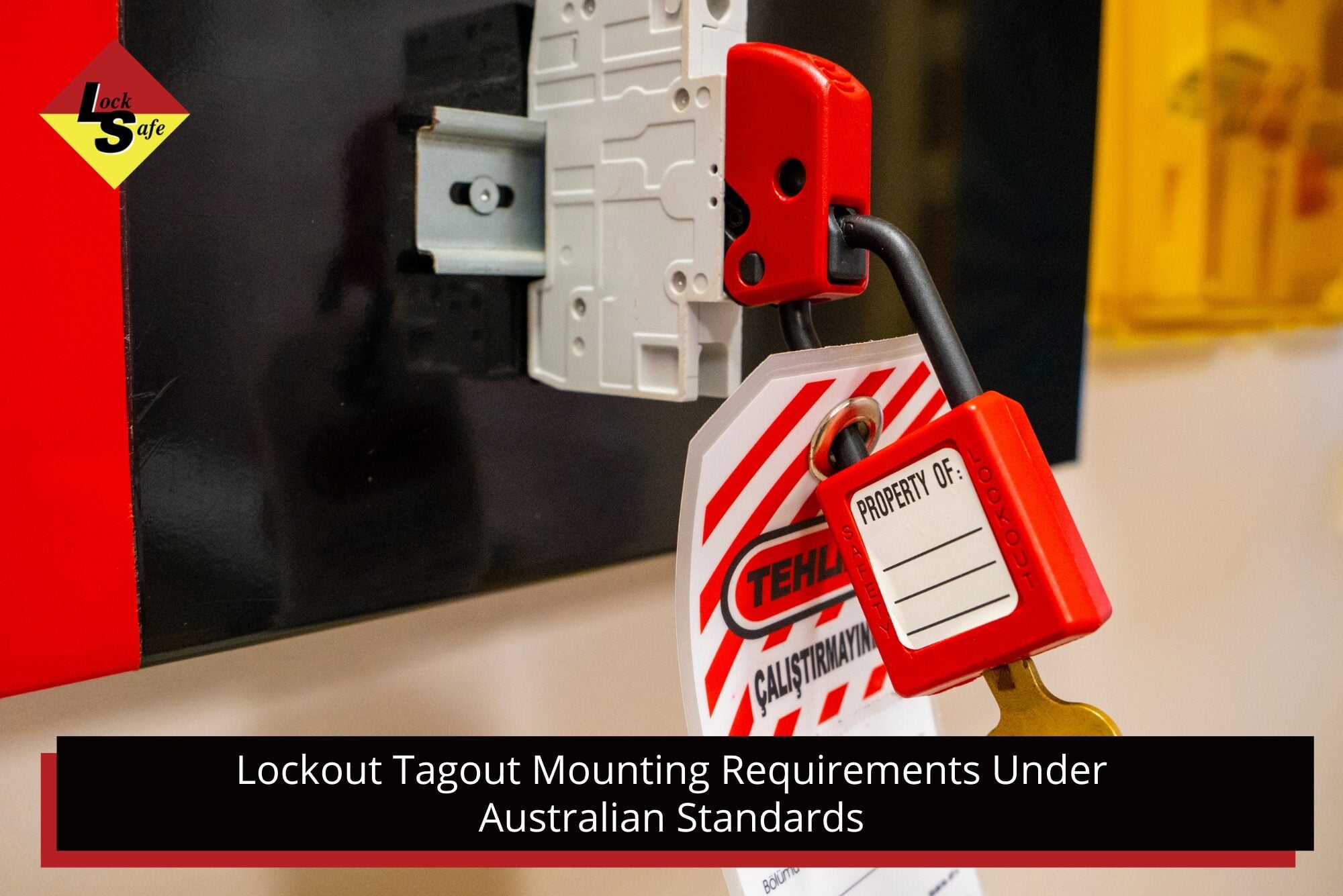
Workers are injured every year not because equipment fails, but because it's improperly isolated during maintenance. In Australia, the solution isn't just best practice—it's mandated by standard. The lockout tagout Australian standard, primarily AS/NZS 4836:2011, sets the benchmark for safe work on electrical and mechanical systems. Ignoring it risks lives and invites severe penalties.
This isn’t about paperwork or box-ticking. It’s about creating a system where machinery can’t start up unexpectedly when someone’s hands are inside it. That requires a structured approach—lockout tagout (LOTO)—grounded in Australian law and industry expectations.
Here’s how to get it right.
What Is the Lockout Tagout Australian Standard?
The primary standard governing lockout tagout in Australia is AS/NZS 4836:2011 – Safe working on low-voltage electrical installations. While focused on electrical safety, it integrates broader principles of isolation applicable to mechanical, hydraulic, pneumatic, and thermal energy sources.
This standard mandates that before any work begins on equipment, all energy sources must be:
- Identified
- Isolated
- Secured using locks and tags
- Verified as de-energised
It’s not optional. Employers must ensure that their isolation procedures comply with this standard, especially when workers interact with energised systems or conduct maintenance on plant and machinery.
AS/NZS 4836 aligns with the broader framework of the Work Health and Safety (WHS) Regulations, which require a systematic approach to risk management. Under WHS laws, PCBUs (Persons Conducting a Business or Undertaking) must eliminate or minimise risks so far as is reasonably practicable.
LOTO is one of the most effective ways to meet that duty.
Why Lockout Tagout Matters in Australian Workplaces
A technician services a conveyor belt. The machine appears off. But a colleague resets a breaker from another room. The belt engages. The result: catastrophic injury.
This isn’t hypothetical. It’s a real risk when isolation procedures are weak or ignored.
In high-risk industries—manufacturing, mining, construction, utilities—multiple energy sources exist in one machine. Residual energy in hydraulic lines, stored electrical charge, or gravitational potential can all cause harm.
The lockout tagout Australian standard exists to prevent these incidents through:
- Positive isolation: Physically disconnecting energy sources and securing them with locks.
- Visual communication: Using tags to warn others not to re-energise.
- Single-point control: Each worker applies their own lock, ensuring no one can restart equipment without their knowledge.
Without LOTO, even trained workers operate under unacceptable risk.
Core Principles of AS/NZS 4836 Compliance
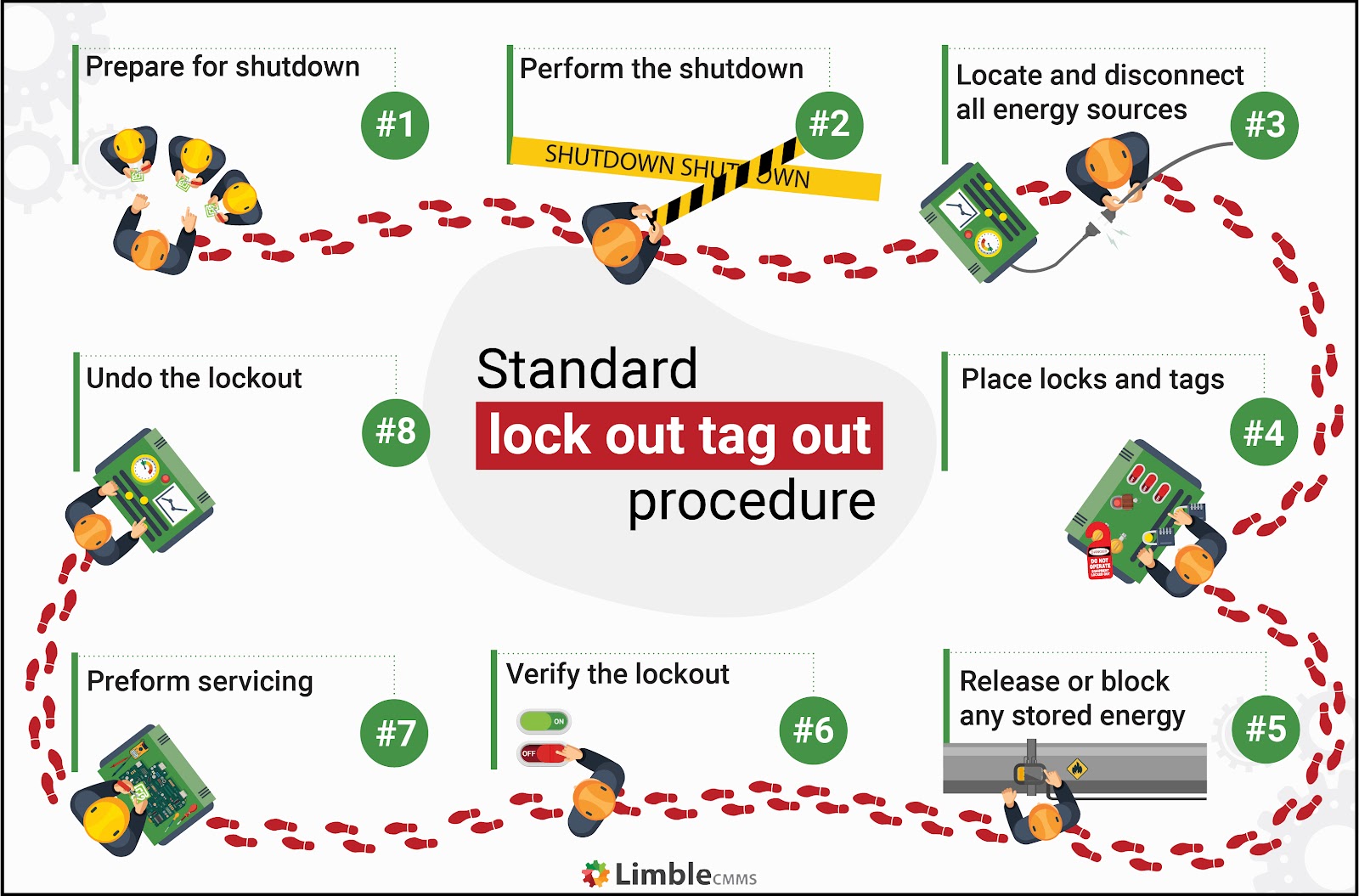
To comply with the lockout tagout Australian standard, follow these key steps:
1. Identify Energy Sources
Before any work, document every potential energy source: - Electrical (main supply, capacitors) - Mechanical (springs, gravity) - Hydraulic and pneumatic pressure - Thermal (steam, hot surfaces) - Chemical (reactive agents)

Example: A packaging line may have electrical drive motors, compressed air actuators, and spring-loaded arms—all requiring isolation.
2. Isolate at the Source Use approved isolation points—disconnect switches, circuit breakers, valves—not emergency stops or control switches, which don’t fully isolate power.
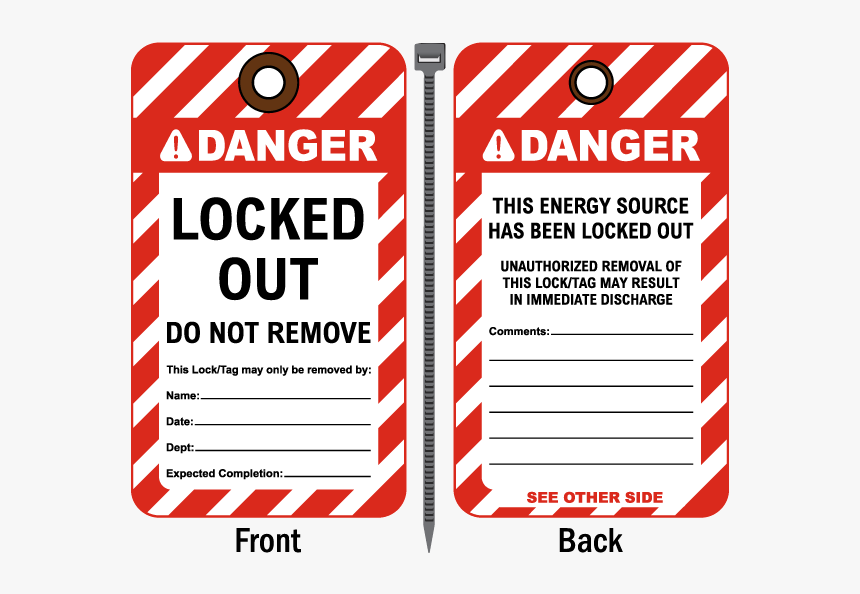
3. Apply Locks and Tags Each worker applies their personal lock to the isolator. A durable tag must state: - Worker’s name - Date and time of isolation - Reason for isolation - Contact information
Tags alone are not enough. They must accompany a physical lock.
4. Verify De-Energisation Test the circuit or system using a "test before touch" method. For electrical work, use a multimeter or voltage tester verified as working on a known live source first.
5. Release Stored Energy Drain capacitors, bleed pressure lines, block moving parts. This step is often overlooked but critical.
6. Clear and Restart Safely Only after work is complete, tools removed, guards replaced, and workers clear should locks be removed—by the same person who applied them.
Common LOTO Mistakes in Australian Operations
Even companies with LOTO programs make costly errors:
- Using group locks incorrectly: A group lockout requires a designated authorising officer, but individual worker locks must still be applied.
- Tag-only systems: Tags can be ignored or removed. Locks enforce discipline.
- Failure to verify isolation: Assuming a switch is off without testing.
- Lack of training: Workers unaware of isolation points or procedures.
- Poor lockbox management: Lost keys, shared lock codes, or missing lockout kits.
One mining contractor faced a $180,000 fine after a worker was injured during maintenance. The investigation found no formal LOTO process, despite AS/NZS 4836 being well established.
Industry-Specific Applications of LOTO
Manufacturing Assembly lines with robotic arms require multi-stage isolation. A single machine may need electrical, pneumatic, and hydraulic locks. Example: A car plant in Geelong reduced near-misses by 70% after implementing AS/NZS 4836-compliant LOTO stations with colour-coded locks.
Utilities Electrical substations follow strict switching orders. LOTO here includes padlocks on disconnect switches and communication logs. Switchroom procedures often integrate with SCADA systems for verification.
Construction Mobile plant—excavators, cranes—require lockout during servicing. A common oversight: failing to isolate auxiliary batteries or hydraulic accumulators.
Food Processing High-pressure washdown environments demand corrosion-resistant locks and tags. Stainless steel hasps and UV-resistant labels are essential.
Building a Compliant LOTO Program
A robust LOTO system includes:
- Written procedures for each machine or system
- Training for all affected and authorised employees
- Audit schedules to verify compliance
- Lockout kits with standardised equipment
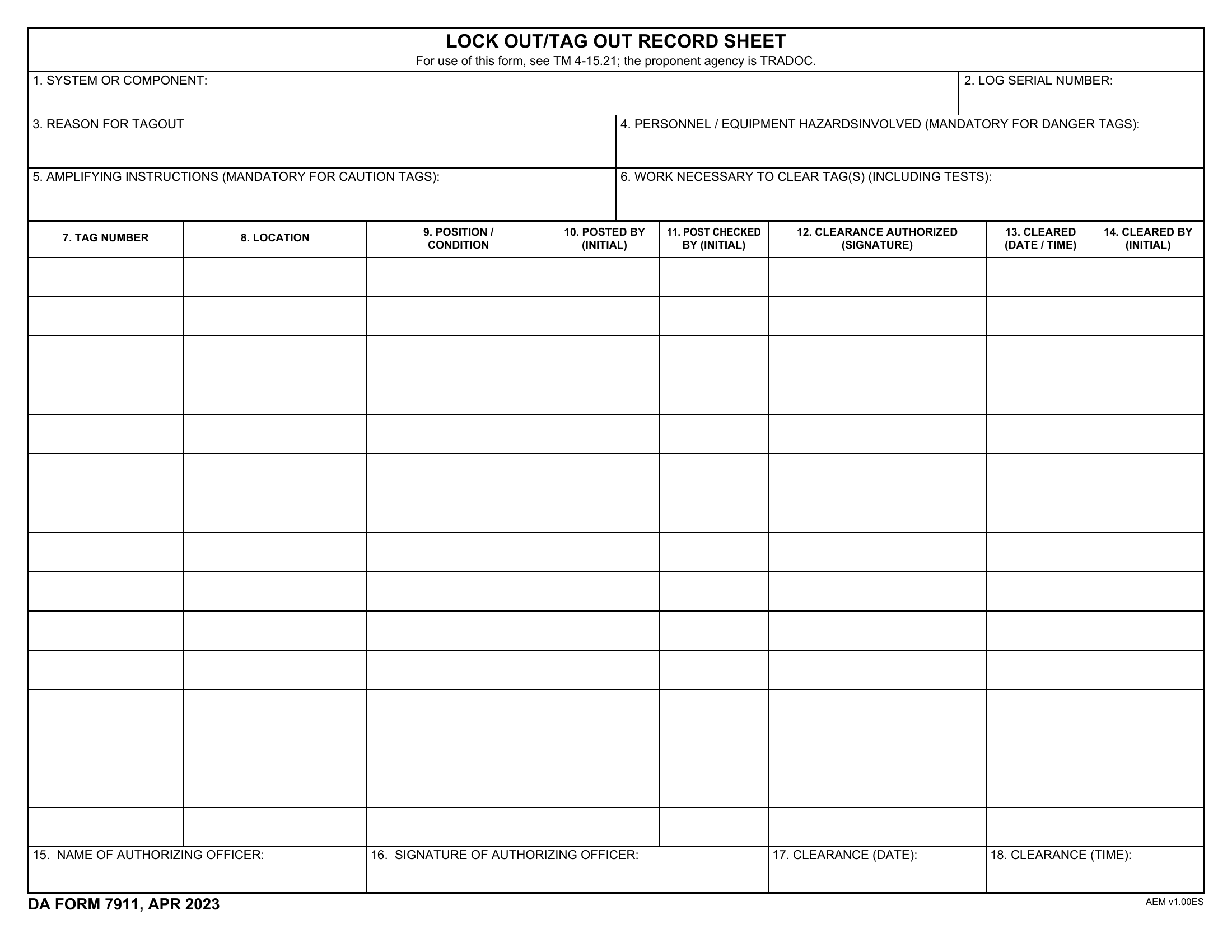
- Energy control registers documenting isolations
Use this checklist to assess your current program:

| Item | Compliant? |
|---|---|
| Is there a documented isolation procedure for each machine? | ☐ |
| Do workers have personal locks and tags? | ☐ |
| Are isolation points clearly labelled? | ☐ |
| Is there a verification process (e.g., test before touch)? | ☐ |
| Are contractors included in LOTO procedures? | ☐ |
Train workers not just on how to lock out, but why. When people understand the consequences of failure, compliance improves.
Equipment and Tools for Effective LOTO
To support your program, invest in reliable gear that meets Australian conditions:
- Brass Padlocks – Corrosion-resistant, non-sparking, ideal for industrial sites. Example: 3M DBI-SALA 3493305.
- Lockout Hasps – Allow multiple locks on one isolation point. Stainless steel versions last longer in humid environments.
- Valve Lockouts – Fit over isolation valves to prevent accidental opening. Use for gas, water, and hydraulic lines.
- Circuit Breaker Locks – Slide over breaker switches to prevent reactivation.
- Tagout Tags – Durable, weatherproof tags with UV-resistant printing. Include spaces for date, name, and hazard type.
- Lockout Stations – Wall-mounted cabinets storing locks, tags, and procedure sheets. Place near high-risk zones.
- Group Lockout Boxes – For multi-person jobs. Each worker places their lock on the box; keys remain inside until all work is done.
Avoid cheap, generic kits. Australian sites need durable, clearly marked equipment that won’t fail under stress.
Training and Enforcement: The Human Factor
A LOTO system only works if people follow it. Training must go beyond theory.
Conduct practical drills where workers: - Identify all energy sources on a real machine - Locate correct isolation points - Apply locks and tags - Verify de-energisation - Coordinate group lockouts
Supervisors should audit 10% of isolations weekly. Use findings to correct gaps—not punish, but improve.
Include contractors in your LOTO plan. Their procedures must align with your site rules. A visitor’s lockout error can endanger your entire team.
Legal and Financial Risks of Non-Compliance
Fines for breaching WHS duties are severe. Under Model WHS Laws: - Category 1 offences (reckless endangerment): Up to $3 million for corporations. - Category 2 (failure to comply with duty): Up to $1.5 million.
But fines are just one cost. Downtime, insurance hikes, reputational damage, and worker compensation claims follow serious incidents.
WorkSafe Victoria prosecuted a meat processor after a worker lost fingers in an unguarded, un-isolated machine. The company paid over $400,000 in penalties and compensation.
Following the lockout tagout Australian standard isn’t just about avoiding fines—it’s about building a culture where safety is non-negotiable.
Final Thoughts: Make LOTO Part of Your Safety DNA
The lockout tagout Australian standard isn’t a one-off project. It’s a continuous practice. It demands attention to detail, ongoing training, and leadership commitment.
Start by auditing your highest-risk equipment. Develop clear procedures. Equip your team. Test your system.
When every worker walks up to a machine knowing exactly how to make it safe, you’ve achieved more than compliance—you’ve built a safer workplace.
Do it right. Do it every time.
Frequently Asked Questions
What is the Australian standard for lockout tagout? The primary standard is AS/NZS 4836:2011, which outlines safe working practices on low-voltage electrical installations and includes requirements for isolation and lockout procedures.
Is tagout alone acceptable under Australian standards? No. Tags must always be accompanied by a physical lock. Tag-only systems are not compliant unless no lock can be applied—and even then, additional controls are required.
Who can remove a lockout device? Only the worker who applied the lock may remove it. In their absence, a formal management procedure must be followed, including verification that the worker is clear of the equipment.
Do contractors need to follow your LOTO procedures? Yes. Host employers must ensure contractors comply with site-specific lockout tagout systems and integrate into existing safety protocols.
Are emergency stops sufficient for isolation? No. Emergency stops do not isolate power sources and should never be used as part of a LOTO procedure.
What industries require LOTO in Australia? Any industry working with machinery or energy sources—manufacturing, mining, construction, utilities, transport, and agriculture—must implement LOTO where maintenance or cleaning involves risk of unexpected start-up.
How often should LOTO procedures be audited? At minimum, annual audits are recommended, but high-risk sites should conduct audits quarterly or after any incident or near-miss.
FAQ
What should you look for in Lockout Tagout Australian Standard: What You Need to Know? Focus on relevance, practical value, and how well the solution matches real user intent.
Is Lockout Tagout Australian Standard: What
You Need to Know suitable for beginners? That depends on the workflow, but a clear step-by-step approach usually makes it easier to start.
How do you compare options around Lockout Tagout Australian Standard: What You Need to Know? Compare features, trust signals, limitations, pricing, and ease of implementation.
What mistakes should you avoid? Avoid generic choices, weak validation, and decisions based only on marketing claims.
What is the next best step? Shortlist the most relevant options, validate them quickly, and refine from real-world results.