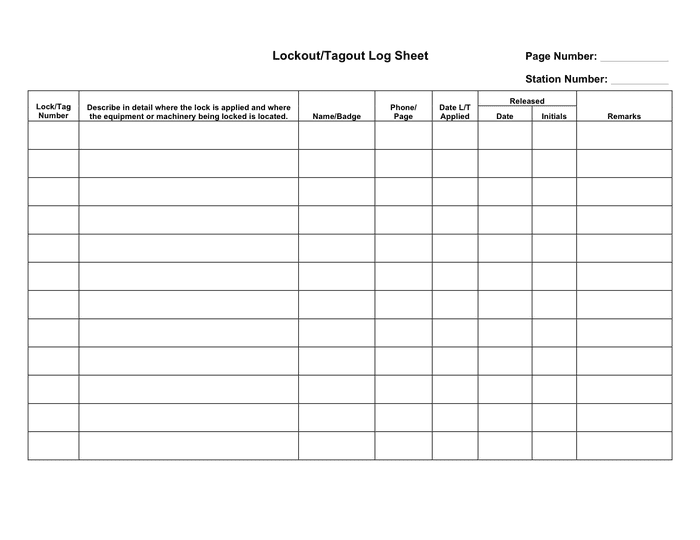
Workplace accidents during equipment maintenance are preventable. Yet every year, dozens of workers suffer serious injuries—or worse—because energy sources weren’t properly isolated. The solution sits in plain sight: lockout tagout (LOTO) boards and locks. These aren’t just compliance checkboxes. They’re engineered systems that enforce accountability, visibility, and control when machinery is down.
A well-designed LOTO system starts with organization. Without it, locks go missing, tags are ignored, and procedures break down. That’s where lockout tagout boards come in—not as passive storage, but as active safety command centers.
Why Lockout Tagout Boards Are Critical
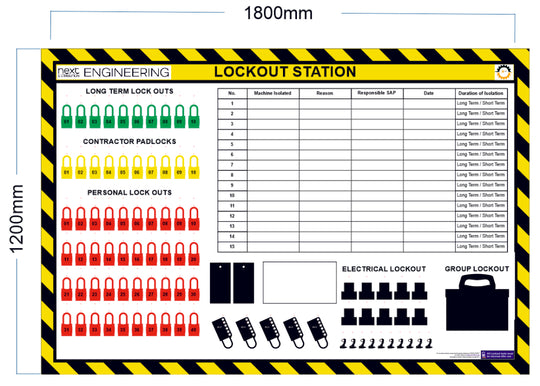
Lockout tagout boards serve as the central hub for control during maintenance. They’re not shelves with hooks. They’re structured systems that assign accountability. Each employee gets a designated spot for their personal lock, tag, and sometimes keys or tools. This prevents unauthorized re-energizing and creates a clear audit trail.
Consider a manufacturing plant where multiple technicians service a conveyor system. Without a board, locks are tossed in a toolbox. One worker assumes the machine is clear. They restart it—only to find a colleague still inside the guard. This scenario kills. With a LOTO board, every lock is accounted for. The machine doesn’t restart until every lock is removed—by the person who applied it.
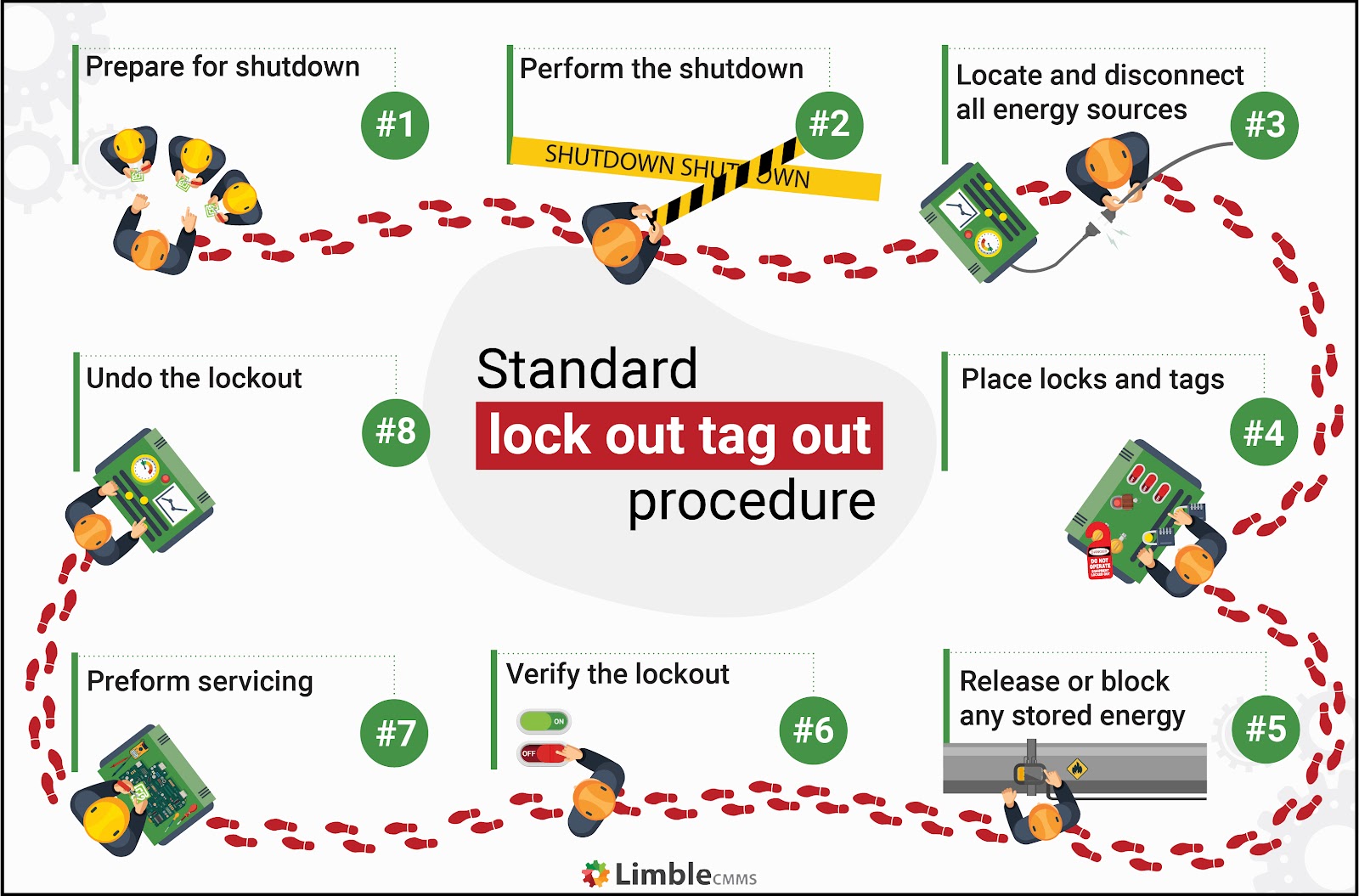
Boards also enforce procedure. Many include laminated checklists, job-specific instructions, or workflow diagrams. This turns compliance into muscle memory.
Types of Lockout Tagout Boards
Not all LOTO boards are the same. The right type depends on your operation’s scale, complexity, and environment.
#### 1. Wall-Mounted Lockout Stations These are the most common. Mounted near high-risk equipment, they house locks, tags, hasps, and instructions. Ideal for fixed machinery in factories or processing plants.
#### 2. Portable Lockout Kits Used in field service or mobile operations. Technicians carry compact cases with their personal locks and tags. These work for HVAC, utility, or construction crews who move between sites.
#### 3. Group Lockout Boards For multi-person jobs. These boards support multiple lock stations and group isolation points. Often used in refineries or chemical plants where one machine needs several isolations.
#### 4. Digital or Smart LOTO Boards Emerging tech integrates QR codes, RFID tags, or digital logs. Workers scan their badge, log the lock application, and the system tracks who’s still locked out. Reduces human error but requires training and infrastructure.
Each type serves a different need—but the goal is uniform: visibility and control.
Choosing the Right Locks for Your System
Locks are the frontline of LOTO. But not any padlock will do. OSHA 1910.147 requires that locks be:
- Durable
- Standardized (same color, same style)
- Personal (assigned to one worker)
- Non-releasable (can’t be removed without the key)
Here are common lock types used in LOTO systems:
| Lock Type | Best For | Key Limitation |
|---|---|---|
| Padlocks (Steel/Non-Conductive) | General machinery | Must be keyed differently per worker |
| Valve Lockouts | Pipe systems, gas lines | Size-specific to valve type |
| Circuit Breaker Locks | Electrical panels | Must fit breaker handle |
| Plug Covers | Electrical outlets | Prevent plug insertion |
| Hasps & Group Locks | Multiple isolations | Requires multiple locks per job |
Most workplaces use a mix. The key is consistency. If one technician uses a red lock and another uses blue, confusion follows. Standardization reduces risk.
Common Mistakes in LOTO Board Implementation
Even with boards and locks in place, failure points remain. Here are the most frequent errors:
1. Using Personal Locks as General Locks A maintenance manager leaves a “master” lock on a board for “emergencies.” This violates OSHA. Locks must be personal and under the worker’s control.
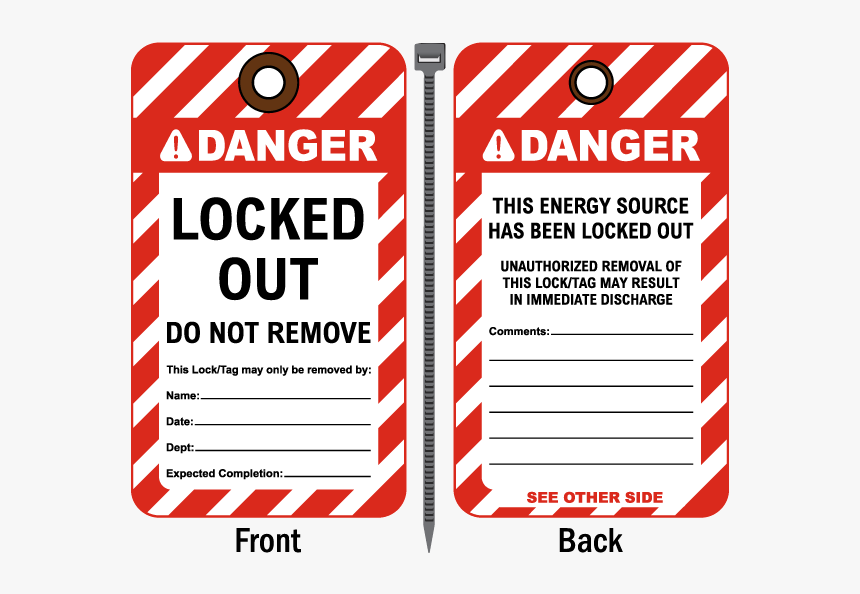
2. Incomplete Tagging Tags without names, dates, or reason for lockout are useless. A tag should say: “John Doe – 8am – Replacing motor bearings. Do not operate.”
3. Poor Board Placement Boards tucked in a back office or behind a door defeat their purpose. They should be near the equipment being serviced.
4. No Training Integration Boards and locks mean nothing if workers don’t understand energy isolation. Annual training with hands-on drills is essential.
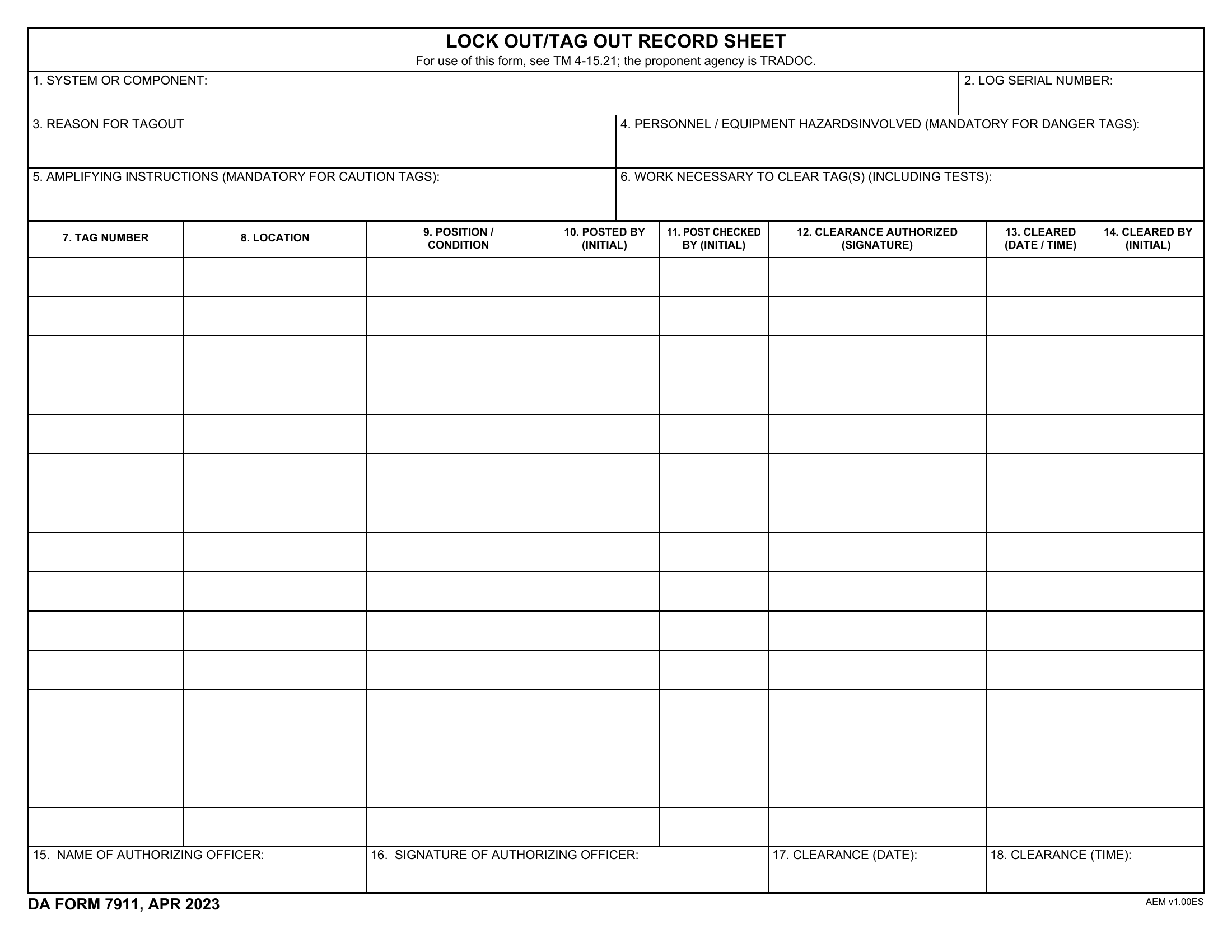
5. Missing Audit Trails Without logs or check-ins, you can’t prove compliance during an inspection. Smart boards help, but even manual sign-in sheets work.
Fixing these issues isn’t complicated—but it requires discipline.
Real-World Use Cases
#### Automotive Manufacturing On an assembly line, a robotic arm requires maintenance. The technician retrieves their lock from the wall-mounted LOTO board, applies it to the main disconnect, tags it with job details, and begins work. The board visually confirms the machine is down. No one else can re-energize it.
#### Water Treatment Facility A pump needs repair. Three workers isolate different energy sources—electrical, hydraulic, and pneumatic. They each apply their lock to a group hasp on the LOTO board. The job isn’t complete until all three remove their locks—no exceptions.
#### Commercial Kitchen A fryer needs cleaning. The cook applies a small lock to the gas valve and tags it. The board outside the kitchen logs the shutdown. A manager checks it before starting any cooking schedule.
In each case, the board isn’t just storage. It’s a control mechanism.
Top 5 Lockout Tagout Board Systems
Selecting the right system depends on your workflow. Here are five reliable options:
- Grace Industries LOTO-36 Station
- - Holds 36 locks
- - Includes slots for tags, instructions, and logs
- - Heavy-duty steel, wall-mounted
- - Best for large teams in manufacturing
- Jonard Tools LOTO Pro Kit
- - Portable, carry-case design
- - 10 personal locks, tags, hasps
- - Ideal for electricians and field techs
- Saf-T-Cage Group Lockout Cabinet
- - Lockable cabinet with individual lock stations
- - Supports up to 20 workers
- - Used in chemical and oil industries
- Seton LOTO Wall Station
- - Affordable, modular design
- - Clear labeling zones, tag reels
- - Common in small factories and labs
- King Towel Smart LOTO System
- - RFID-enabled tracking
- - Digital logs, mobile alerts
- - Reduces paperwork in regulated environments

Each serves a niche. The key is matching the system to your operational rhythm.
How Locks and Tags Work Together
A lock prevents physical access. A tag communicates. Together, they form a failsafe.
OSHA requires that tags include: - Employee name - Date and time of lockout - Reason for isolation - Department or shift
A tag without a lock is a warning. A lock without a tag is a mystery. Both are non-compliant.
Example: An electrician locks out a panel but forgets to tag it. A supervisor sees the lock, assumes it’s temporary, and removes it. Result: electrocution risk. Proper tagging prevents assumptions.
Best practice: Use durable, weather-resistant tags with pre-printed fields. Handwritten notes fade or smudge. Pre-formatted tags reduce error.
Building a Sustainable LOTO Program
Boards and locks aren’t a one-time purchase. They’re part of a living safety program.
Start with an energy control plan. Map every machine, every energy source (electrical, hydraulic, thermal, pneumatic), and every isolation point. Then train all affected employees—not just maintenance staff.
Conduct periodic audits. Walk through a shutdown scenario. Can every technician follow the procedure? Are locks where they should be? Is tagging complete?
Update boards as operations scale. Add more slots, refresh damaged tags, replace worn locks.
And never allow “exception culture.” No shortcuts during overtime. No verbal approvals. LOTO isn’t flexible—it’s fixed.
A lockout tagout board is more than metal and plastic. It’s a culture of accountability. When every worker sees their lock in its place, when every tag tells a clear story, safety becomes routine. The best systems aren’t the most expensive—they’re the ones used correctly, every single time.
Set up your board where it’s seen. Train until the procedure is instinct. Audit until compliance is second nature. That’s how you stop accidents before they start.
Frequently Asked Questions
What is the purpose of a lockout tagout board? A LOTO board centralizes locks, tags, and procedures during equipment maintenance to prevent accidental startup and ensure accountability.
Can one lock be used for multiple machines? No. Each lock must be applied to a specific isolation point, and each machine or energy source requires its own lockout procedure.
Does OSHA require lockout tagout boards? OSHA doesn’t mandate boards specifically, but they require documented lockout procedures, employee training, and proper lock/tag use—boards help meet these requirements.
How many locks should a LOTO board hold? It depends on your team size and equipment complexity. Boards range from 5 to 50+ lock stations. Match capacity to your largest typical maintenance crew.
Can plastic locks be used for LOTO? Yes, if they’re durable and non-conductive. However, metal locks are preferred for high-abuse environments.
Should locks be keyed alike? No. Each worker should have a unique key to their personal lock. Keyed-alike systems defeat personal accountability.
What happens if a worker loses their lock key? The lock must be removed by a supervisor using a documented override procedure—only after confirming it’s safe. The incident should be logged and reviewed.
FAQ
What should you look for in Lockout Tagout Boards and Locks: A Safety System Guide? Focus on relevance, practical value, and how well the solution matches real user intent.
Is Lockout Tagout Boards and Locks: A Safety System Guide suitable for beginners? That depends on the workflow, but a clear step-by-step approach usually makes it easier to start.
How do you compare options around Lockout Tagout Boards and Locks: A Safety System Guide? Compare features, trust signals, limitations, pricing, and ease of implementation.
What mistakes should you avoid? Avoid generic choices, weak validation, and decisions based only on marketing claims.
What is the next best step? Shortlist the most relevant options, validate them quickly, and refine from real-world results.